
Why Simple Drawing Ideas to Copy Are the Best Starting Point
Staring at a blank piece of paper can feel incredibly intimidating, especially when you are just beginning your art journey. The pressure to create a masterpiece right out of the gate often leads to frustration and a quick loss of motivation. This is exactly why finding simple drawing ideas to copy changes the game entirely. When you start with uncomplicated subjects, you remove the mental block of perfectionism and allow yourself to focus purely on the physical act of drawing.
Copying simple sketches is not about lacking creativity; it is a foundational practice used by artists for centuries. It builds muscle memory, teaches you how to observe proportions, and helps you understand how basic shapes combine to form complex objects. In 2026, combining this timeless practice with modern augmented reality tools makes learning to draw more accessible than ever before. You no longer need expensive lightboxes or bulky projectors to get accurate proportions. All you need is your smartphone and a willingness to practice.
How to Use Your Phone Camera as a Tracing Guide
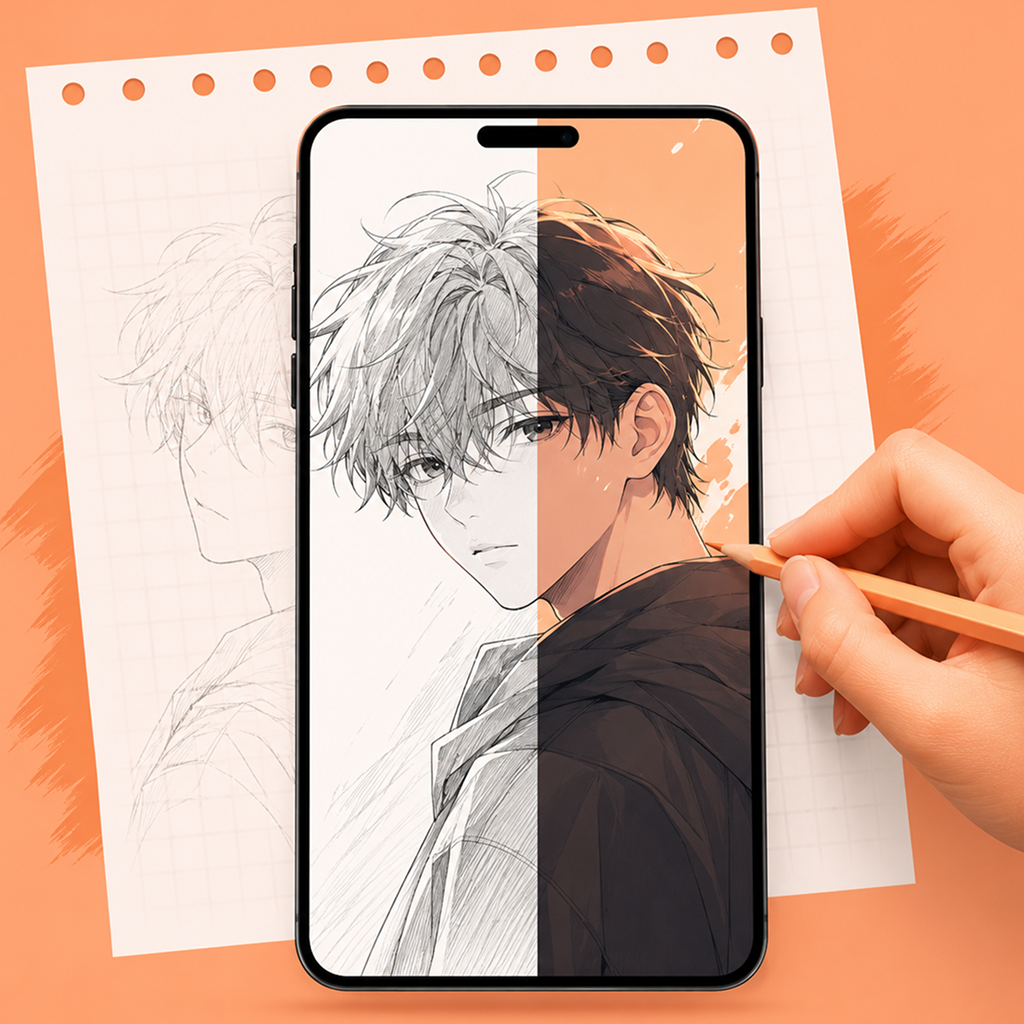
Before diving into the list of subjects, it is helpful to understand how modern technology can assist your practice. Using a smartphone as a tracing tool bridges the gap between digital convenience and traditional paper sketching. Apps designed for augmented reality drawing allow you to upload or select an image from your gallery and project it as a semi-transparent overlay directly onto your paper.
50 Cute Doodle Ideas for When You're Bored at School | Easy Beginner Doodles
by Shayda Campbell
By looking through your phone screen, you can align the digital image with your physical paper and trace the outlines with a real pencil. This method provides immediate visual feedback and ensures your proportions are correct from the very first stroke. If you want to explore more about this technique, checking out resources on easy things to sketch with your phone can give you a deeper understanding of how to maximize your device for art.
The key to success with AR tracing is to treat the overlay as a guide, not a crutch. Trace the main structural lines first, then remove the phone and try to add shading, textures, and details freehand. This hybrid approach builds both accuracy and creative confidence.
10 Simple Drawing Ideas to Copy in 2026
Now that you have your tools ready, it is time to start sketching. Here are ten simple drawing ideas to copy that are perfect for beginners and hobbyists looking to refine their skills this year.
1. Minimalist Botanicals
Single-stem flowers like tulips, daisies, or simple roses are excellent starting points. They consist of basic curves and overlapping shapes, making them ideal for practicing smooth, continuous pencil strokes. When tracing a minimalist botanical, focus on the flow of the stem and the gentle curvature of the petals. This helps you develop a relaxed grip and fluid hand movements, which are essential for natural-looking line art.
2. Geometric Animal Faces
Animals can be complex, but breaking them down into geometric shapes makes them highly approachable. A fox or cat face constructed from triangles, circles, and straight lines teaches you how to map out proportions. Copying these geometric animal faces helps you understand spatial relationships and symmetry without getting overwhelmed by fur details or realistic anatomy.
3. Simple Landscapes
A basic landscape featuring rolling mountains, a horizon line, and a simple sun or moon is a classic exercise. This idea is fantastic for learning how to layer elements and create a sense of depth. When you trace the background mountains and then the foreground elements, you naturally practice the concept of atmospheric perspective, where distant objects are drawn with lighter, softer lines.
4. Coffee Cups and Mugs
While it might seem mundane, drawing a coffee cup is a masterclass in understanding three-dimensional forms. Mugs are essentially cylinders with a handle. Copying this subject forces you to practice drawing ellipses for the rim and the base, ensuring they align correctly in perspective. It is a highly practical exercise for anyone looking to improve their technical drawing skills.
5. Basic Seashells
Seashells, particularly spiraled ones like conchs or scallops, are wonderful for practicing repetitive curves and spirals. Tracing the intricate but predictable patterns of a shell helps you build rhythm in your hand movements. It also teaches you how to use line weight—pressing harder for shadows and outlines, and using lighter strokes for inner details.
6. Minimalist Hand Outlines
Hands are notoriously difficult to draw, which is why starting with a minimalist outline of a resting hand is a smart move. By copying a simple, stylized version of a hand, you learn the basic proportions of the palm and fingers without the stress of rendering every knuckle and vein. It builds a foundational understanding of human anatomy in a low-pressure way.
7. Cute Food Items
Drawing simple food items like a single sushi roll, a donut with sprinkles, or a slice of pizza is incredibly fun and rewarding. These subjects are usually composed of basic shapes like circles, rectangles, and triangles. They also allow you to practice simple textures, like the bumpy surface of a donut or the distinct layers of a sushi roll, keeping your practice sessions engaging.
8. Abstract Continuous Line Art
Continuous line art, where the pencil never leaves the paper, is a fantastic exercise for hand-eye coordination. Copying abstract faces or simple objects drawn in a single line forces you to plan your strokes and accept imperfections. It teaches you to let go of the need for perfect erasure and embrace the organic, flowing nature of your natural hand movements.
9. Simple Trees and Leaves
Drawing the outline of an oak or maple tree, or focusing on a single large leaf, helps you understand organic shapes. Unlike geometric objects, nature is asymmetrical and irregular. Tracing and copying these forms trains your eye to observe subtle variations in shape and teaches you how to branch out lines naturally without making them look stiff or mechanical.
10. Basic Vehicles
A simple side-profile of a bicycle or a basic car is a great way to introduce mechanical drawing to your routine. Vehicles require an understanding of perspective, wheel alignment, and structural symmetry. Copying a simplified vehicle helps you practice drawing consistent circles for wheels and straight, aligned lines for the chassis, which are crucial skills for technical sketching.
Building Hand Control with AR Tracing
The ultimate goal of copying simple drawing ideas is to transition from tracing to freehand drawing with confidence. Augmented reality tracing accelerates this process by giving your brain a clear visual map of what success looks like. As you repeatedly trace these simple subjects, your brain begins to internalize the proportions and curves.
To get the most out of your practice, try the trace-and-replicate method. First, trace the image using your phone overlay to get the perfect outline. Then, put the phone away and try to draw the exact same subject freehand on a fresh piece of paper. Compare the two. This exercise highlights exactly where your spatial awareness needs improvement. For more structured practice routines, you can explore guides on what to draw for beginners to keep your skill-building on track.
Traditional Methods vs. AR Smartphone Tracing
If you are wondering how using a smartphone compares to older tracing methods, here is a quick breakdown of what to expect from each approach.
| Feature | Traditional Lightbox / Window | Smartphone AR Tracing App |
|---|---|---|
| Setup Time | Requires physical equipment and specific lighting conditions. | Instant setup; just open the app and point your camera. |
| Image Sizing | Fixed by the physical size of your lightbox or paper. | Infinitely adjustable by pinching and zooming on the screen. |
| Portability | Bulky and difficult to transport. | Highly portable; practice anywhere with your phone and a sketchbook. |
| Image Source | Limited to physical prints or transparencies. | Use any digital image from your phone gallery or the internet. |
| Cost | Requires purchasing a dedicated lightbox. | Uses a device you likely already own. |
As the table illustrates, smartphone AR tracing offers unmatched convenience and flexibility. It removes the friction from your practice routine, making it much easier to sit down and draw for just ten minutes a day.
Conclusion and Next Steps
Starting your art journey does not require natural talent or expensive equipment; it simply requires the right approach and consistent practice. By focusing on simple drawing ideas to copy, you build the foundational skills of proportion, line control, and spatial awareness without the frustration of starting with overly complex subjects.
Use your smartphone camera as your personal drawing assistant, trace the outlines to build confidence, and gradually challenge yourself to add details freehand. If you are looking to expand your repertoire after mastering this list, be sure to check out our guide on 15 easy drawing ideas to trace today to keep your momentum going. Grab your phone, download an AR drawing tool, and start turning those blank pages into beautiful sketches today.