Why Tracing is the Best Way to Start Drawing in 2026
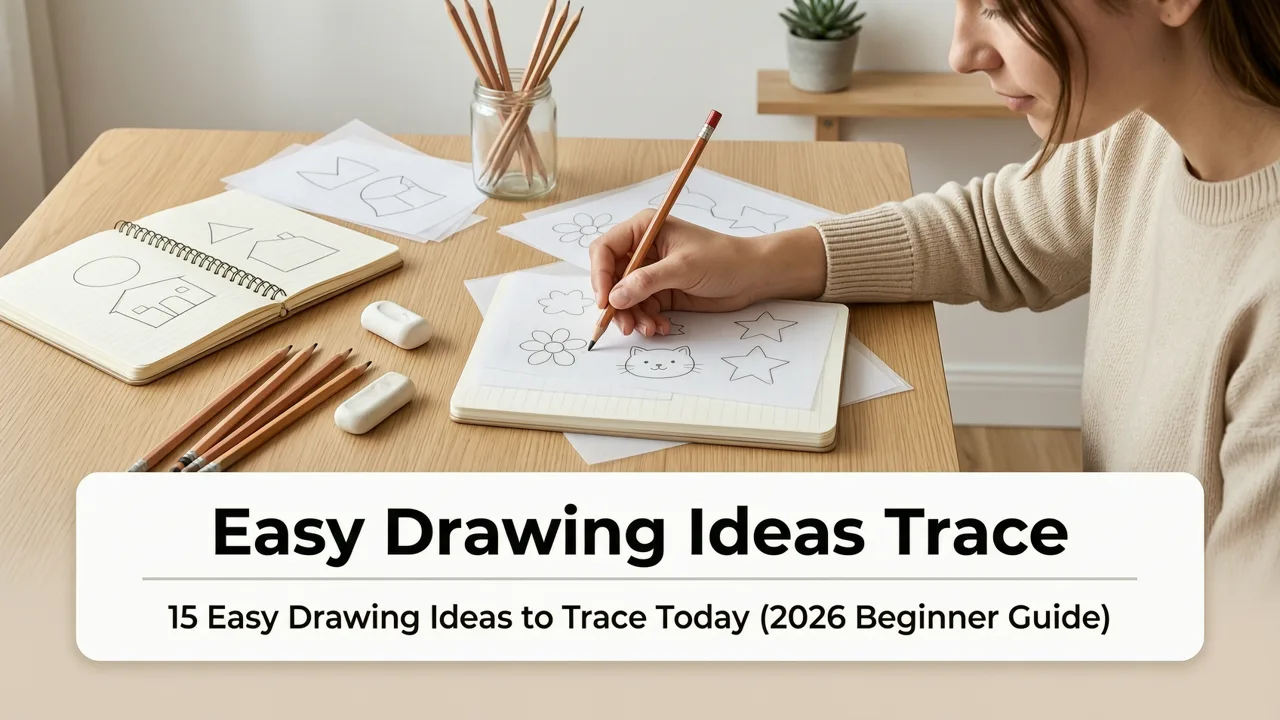
Staring at a blank piece of paper can be intimidating, but finding easy drawing ideas to trace changes the game entirely. If you want to build sketching accuracy and hand control without investing in expensive tablets or messy projectors, augmented reality tracing is the smartest path forward in 2026. This guide breaks down 15 beginner-friendly subjects and shows exactly how to use your smartphone camera as a personal drawing guide.
Tracing is not about copying; it is about building muscle memory. When you trace, your brain learns how proportions, angles, and curves translate from a flat image to your physical hand movements. By using an AR overlay projector on your phone, you eliminate the guesswork of sizing and perspective, allowing you to focus purely on line weight and pencil control.
15 Easy Drawing Ideas to Trace Today
Whether you have five minutes or an entire afternoon, these subjects are designed to build your confidence. They start with basic shapes and gradually introduce more complex contours.
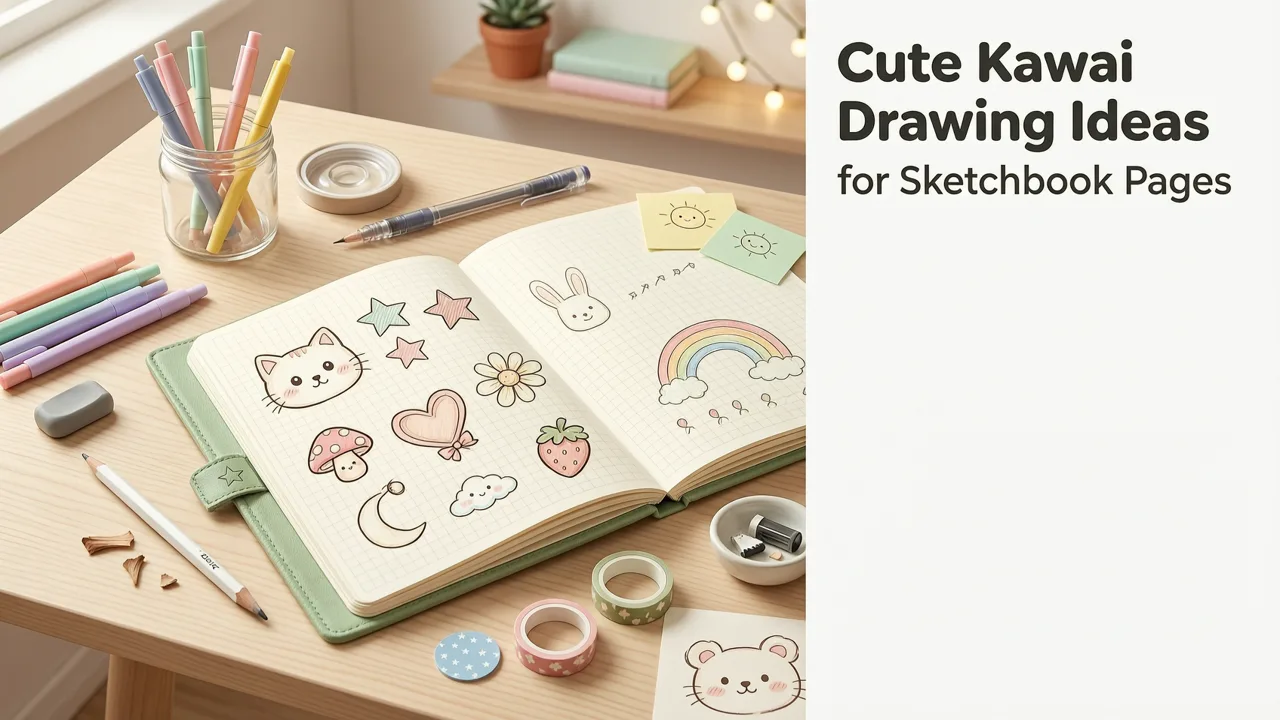
32 Fun and Simple Drawing Tricks Easy Tips on How to Draw and Doodle
by Facedrawer - Arts & Paper Crafts
Nature and Botanicals
1. A Single Monstera Leaf
This is a fantastic starting point for simple line art. The deep cuts and broad curves teach you how to manage continuous, flowing lines while understanding negative space.
2. A Simple Daisy
Tracing a daisy helps you practice radial symmetry. You will learn to draw consistent petal shapes around a central circle, which is a foundational beginner sketching practice exercise.
3. A Pinecone
A pinecone introduces repetitive scale patterns. It teaches you how to layer overlapping shapes and vary your pencil pressure to create depth and texture.
4. A Basic Mushroom
With its simple dome and straight stem, a mushroom is perfect for practicing basic 3D form. It helps you understand how to shade a curved surface and a cylindrical base.
Animals and Pets
5. A Sleeping Cat Silhouette
Smooth, sweeping lines are the focus here. If you love felines, you can explore more detailed techniques when you trace cat drawing on paper with your phone. A sleeping pose removes the complexity of facial features and focuses on body language.
6. A Puppy’s Face
Capturing floppy ears and soulful eyes requires attention to proportion. For more canine inspiration, learn how to trace a dog picture on paper with your phone to master fur texture and snout placement.
7. A Butterfly
Butterflies are the ultimate exercise in symmetry. Tracing the wings helps you understand how to balance complex patterns on both sides of a central axis.
8. A Simple Fish
A basic fish shape introduces you to scales and fins. It is an excellent way to practice drawing repeating textures within a confined boundary.
Everyday Objects and Food
9. A Coffee Mug
This object teaches you about cylinders and ellipses. Understanding how the circular rim of a mug changes shape based on your viewing angle is a crucial skill in perspective drawing.
10. A Sliced Lemon
A lemon slice is all about circles and segments. It helps you practice drawing precise internal lines that meet perfectly at the center and the outer rind.
11. A Pair of Sneakers
Sneakers look complex, but they are just a collection of overlapping curves and straight lines. Tracing them breaks down a complicated object into manageable, simple shapes.
12. A Mason Jar
A mason jar focuses on straight lines, basic reflections, and the threading on the lid. It is a great exercise in maintaining parallel lines and consistent spacing.
Simple Characters and Abstract Shapes
13. A Minimalist Ghost
A classic ghost shape is essentially a continuous line exercise. It helps you practice smooth transitions between straight vertical lines and curved bottom edges.
14. A Basic Snowflake
Snowflakes are pure geometry. Tracing one improves your precision and teaches you how to replicate a single motif across multiple symmetrical axes.
15. A Cartoon Planet with a Ring This combines a simple sphere with an elliptical ring. It is a brilliant way to practice drawing objects in space and understanding how foreground and background elements overlap.
How to Trace These Ideas Using Your Phone
Setting up your augmented reality tracing session takes less than a minute. You do not need a dark room, a lightbox, or a bulky projector. Here is how to use your phone camera as a drawing guide.
- Select Your Image: Open your AR drawing app and choose one of the easy drawing ideas to trace from your camera roll or the app’s built-in library.
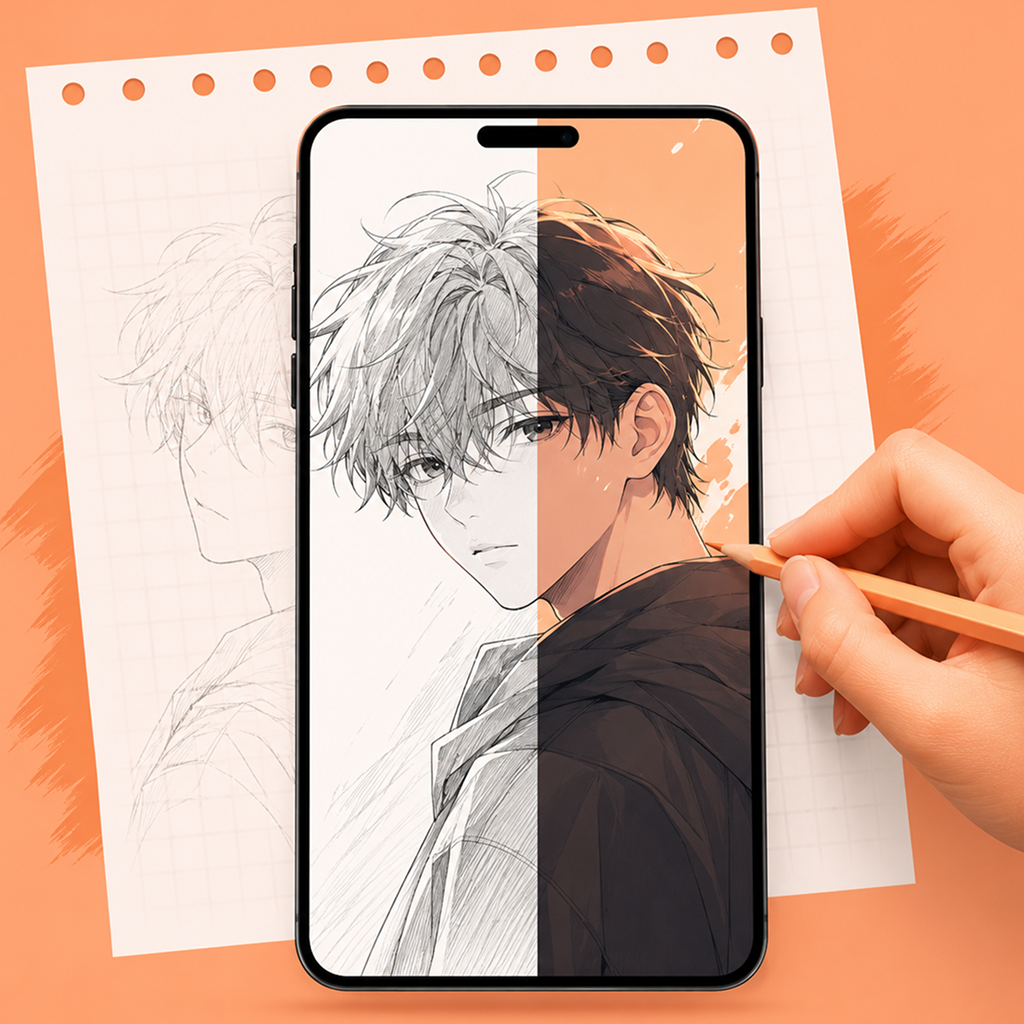
- Activate the AR Overlay: Select the tracing mode. The app will use your phone’s camera to capture the physical paper in front of you.
- Align and Resize: Pinch and drag the digital image on your screen until it aligns perfectly with your paper. You can rotate it to match your preferred drawing angle.
- Trace and Refine: Hold your phone steady and trace the visible lines with your pencil. For a complete walkthrough, follow the AR Drawing App Tutorial: Trace & Learn in 5 Minutes (2026).
Traditional Tracing vs. AR Phone Tracing (2026 Comparison)
Why has the tracing app for iPhone become the preferred method for hobbyists in 2026? Here is a direct comparison of traditional methods versus modern augmented reality.
| Feature | Traditional Lightbox / Projector | AR Phone Tracing App |
|---|---|---|
| Setup Time | 5 to 15 minutes (requires cables, dark rooms, or taping paper) | Under 30 seconds |
| Equipment Cost | $30 to $150+ for dedicated hardware | Free or low-cost app using existing smartphone |
| Portability | Low (heavy and requires a power outlet) | High (draw anywhere at a cafe, park, or desk) |
| Image Adjustment | Difficult (requires physically moving the projector or paper) | Instant (pinch, zoom, and rotate on screen) |
| Eye Strain | High (staring at a bright lightbox in a dark room) | Low (tracing in normal ambient room lighting) |
Tips for Building Hand Control and Confidence
Tracing is only the first step. To truly improve your skills, combine your tracing sessions with these hand control exercises.
- Focus on Line Weight: Do not just draw a single, uniform line. Practice applying more pressure on the downward strokes and less pressure on the upward strokes to create dynamic, professional-looking lines.
- Draw from the Shoulder: Avoid drawing tiny details by only moving your wrist. Lock your wrist and move your entire arm from the shoulder to create smoother, more confident curves.
- Practice Ghosting: Before your pencil touches the paper, hover your tip over the line and practice the movement in the air. This builds muscle memory and prevents hesitant, scratchy lines.
- Take Frequent Breaks: Hand fatigue leads to shaky lines. Step away every 20 minutes to stretch your fingers and rest your eyes.
Start Your Drawing Journey Today
Finding easy drawing ideas to trace is the easiest way to remove the frustration from learning how to sketch. By using augmented reality to guide your hand, you bypass the initial hurdles of proportion and perspective, allowing you to enjoy the physical act of drawing from day one.
Ready to turn your smartphone into a powerful sketching tool? Download the AR Drawing app for iOS today, pick your first subject from the list above, and start building your artistic confidence.