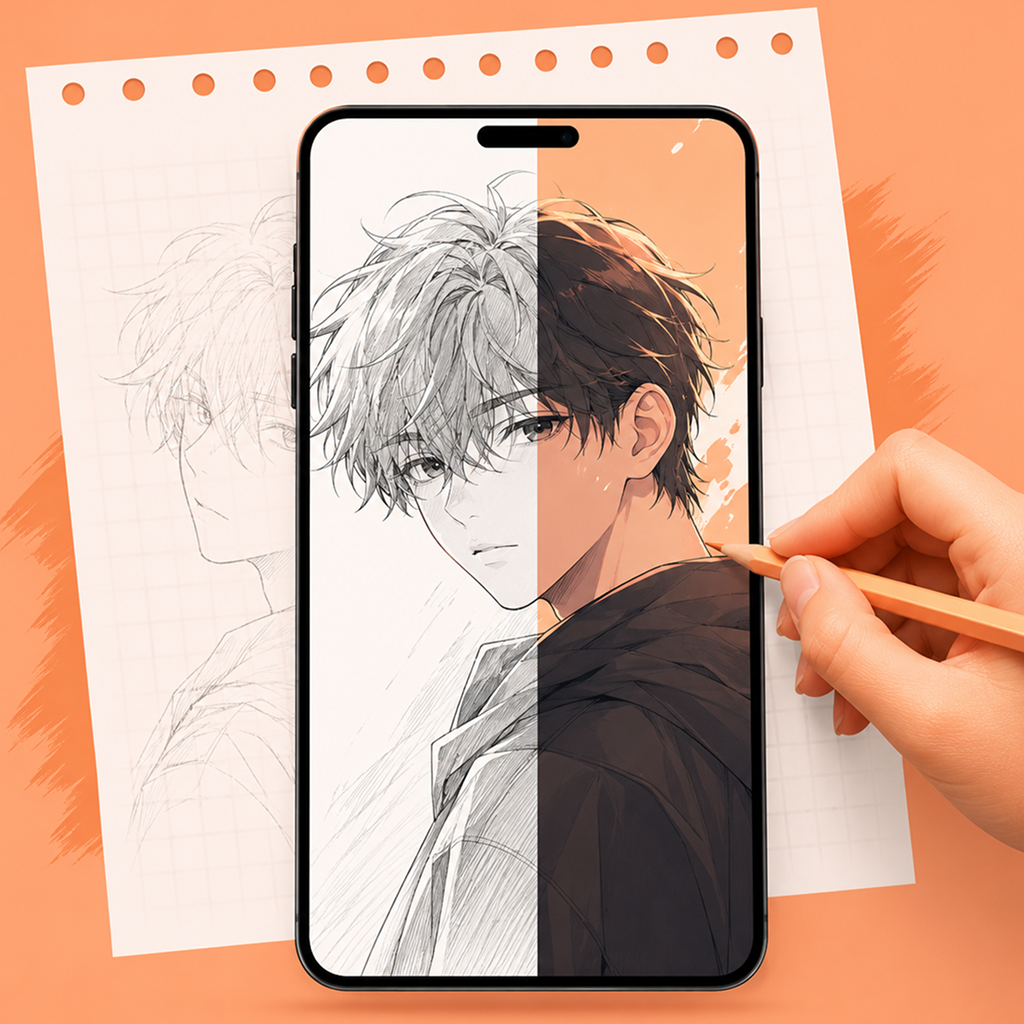

Staring at a blank sketchbook can feel overwhelming, but discovering cool drawing ideas to trace instantly removes the pressure of perfection. If you want to build hand control and learn accurate proportions without years of frustrating practice, augmented reality (AR) tracing is the ultimate shortcut. In this guide, we will explore 50 cool drawing ideas to trace for beginners, along with a simple method to project any image onto your paper using just your smartphone camera.
Why Tracing is the Best Way to Start Drawing in 2026

Many traditional art teachers discourage tracing, but modern approaches recognize it as a highly effective tool for building foundational skills. When you trace, you bypass the initial struggle of proportion and perspective, allowing your brain to focus entirely on line quality and muscle memory.
By repeatedly tracing well-designed images, you internalize how curves connect, where shadows fall, and how complex shapes are constructed from simple geometry. In 2026, with the rise of accessible AR drawing apps, tracing has become easier than ever. You no longer need a messy lightbox or a sunny window; your phone screen acts as a perfect, adjustable overlay.
Unlimited Drawing Ideas!
by Chris Piascik
How to Trace These Cool Drawing Ideas to Trace Using Your Phone
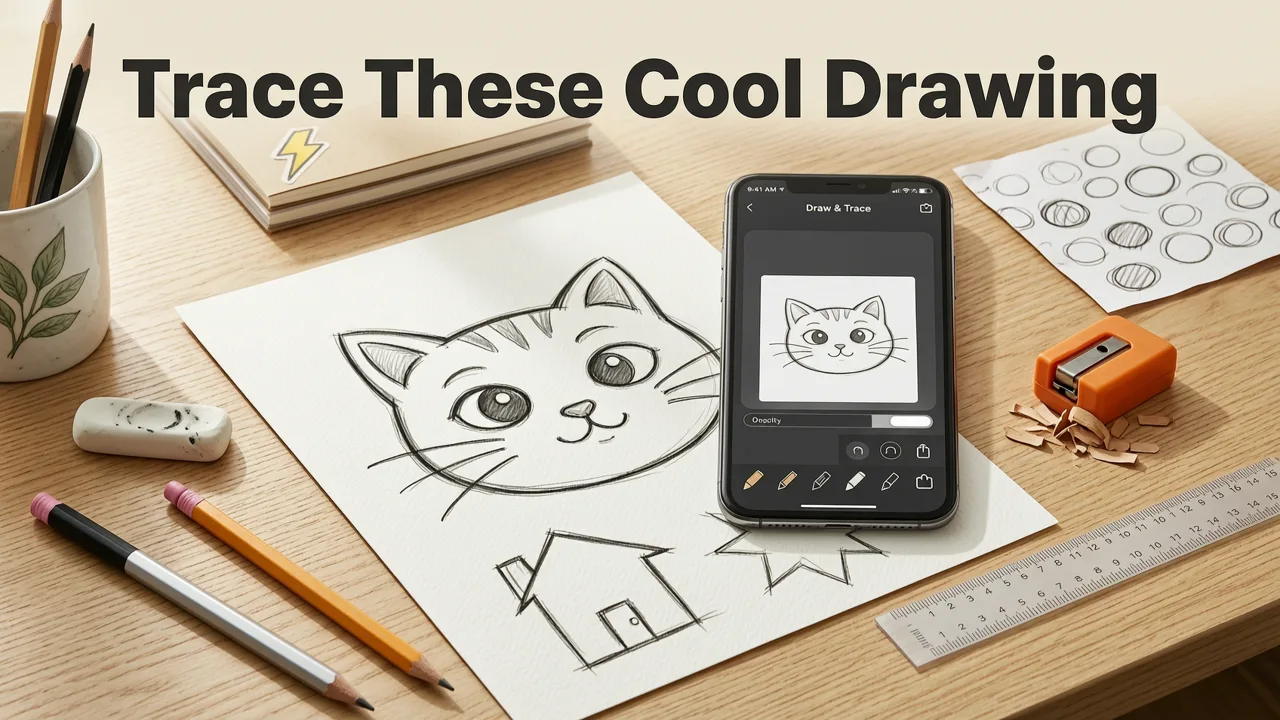
Before diving into the list, it helps to understand how to set up your workspace for AR tracing. The process is incredibly simple and takes less than a minute.
- Find your image: Choose a line-art reference or a high-contrast photo from your camera roll or the internet.
- Open your AR drawing app: Upload the image into the app’s tracing mode.
- Position your paper: Place a blank sheet of paper on a flat, well-lit table.
- Align the overlay: Hold your phone above the paper. The app will project the image onto your physical page through the camera lens.
- Trace and refine: Use a pencil to follow the glowing lines on your paper. You can adjust the opacity or size of the overlay as you go.
This method keeps your hands free and allows you to trace at your own pace, making it the perfect companion for the ideas listed below.
50 Cool Drawing Ideas to Trace for Beginners
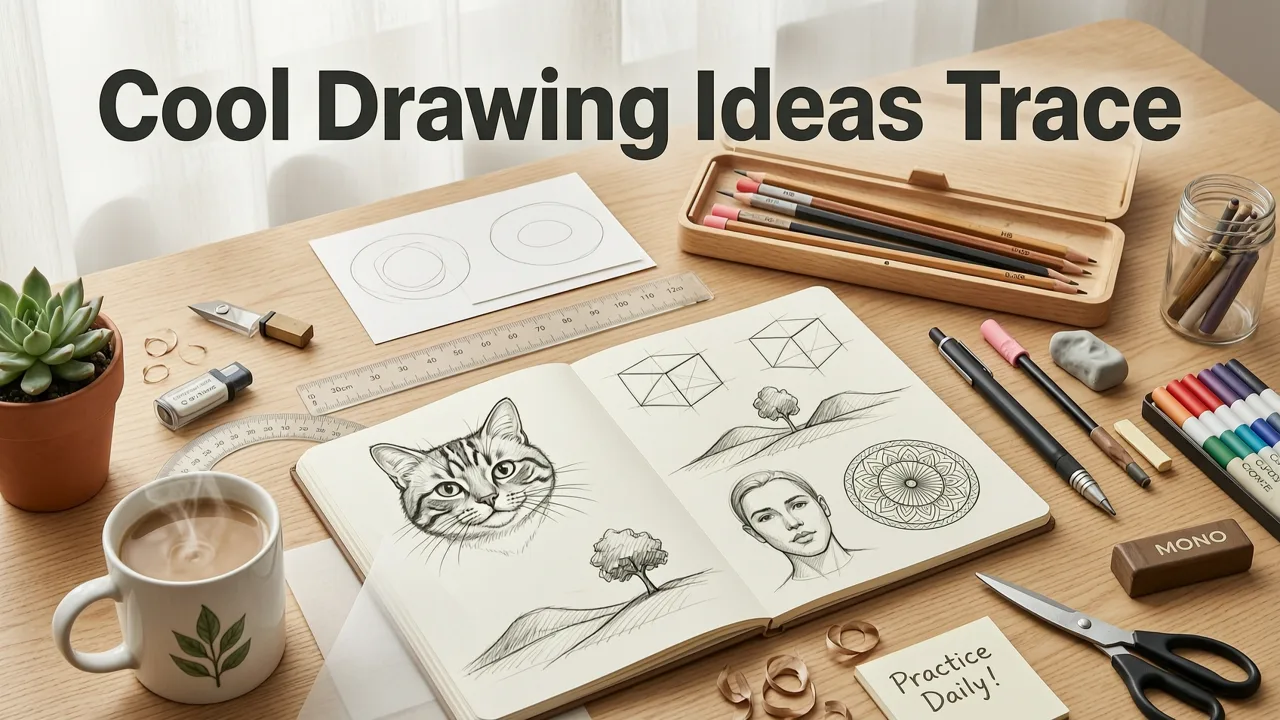
To keep your practice sessions fresh and engaging, we have broken down 50 cool drawing ideas to trace into five distinct categories. Whether you want to sketch adorable pets or practice everyday objects, there is something here for every skill level.
1-10: Simple Shapes and Everyday Objects
Starting with everyday objects helps you understand basic geometry and perspective. These items are excellent for warming up your hand before moving on to complex subjects. If you want more inspiration in this category, check out our guide on 20 Easy Cute Drawing Ideas for Beginners.
- 1. A Classic Coffee Mug: Perfect for practicing cylinders and ellipses.
- 2. A Pair of Sunglasses: Helps you master symmetry and curved lenses.
- 3. A Sneaker: A great way to understand complex overlapping shapes and laces.
- 4. A Pocket Knife: Teaches you about sharp angles and mechanical hinges.
- 5. A Paper Airplane: Excellent for practicing straight, confident lines and perspective.
- 6. A Retro Camera: Fun to trace the dials, lenses, and textured grips.
- 7. A House Key: A simple silhouette that builds confidence in contour drawing.
- 8. A Lightbulb: Great for practicing perfect ovals and the internal filament.
- 9. A Wristwatch: Challenges you to draw precise circles and small details.
- 10. A Backpack: Allows you to practice zippers, pockets, and fabric folds.
11-20: Cute Animals and Pets
Animals are notoriously difficult to draw from scratch because their anatomy is complex. Tracing is the best way to learn their proportions. For a deep dive into canine anatomy, read our tutorial on How to Draw a Dog Step by Step with Your Phone. You can also explore more options in our Easy Cute Animals to Sketch guide.
- 11. A Sitting Cat: Focus on the curve of the spine and the placement of the paws.
- 12. A Golden Retriever Puppy: Practice drawing floppy ears and expressive eyes.
- 13. A Bunny Rabbit: Excellent for mastering long, sweeping fur lines.
- 14. A Sea Turtle: A fun way to trace geometric shell patterns.
- 15. An Owl: Great for practicing symmetry and feather textures.
- 16. A Panda Bear: Simple, bold shapes that are highly rewarding to trace.
- 17. A Koi Fish: Helps you understand fluid motion and flowing fins.
- 18. A Frog: Teaches you about wide stances and bulging eye proportions.
- 19. A Butterfly: The ultimate exercise in mirroring complex wing patterns.
- 20. A Sloth: A relaxed subject that lets you practice hanging poses.
21-30: Food, Drinks, and Desserts
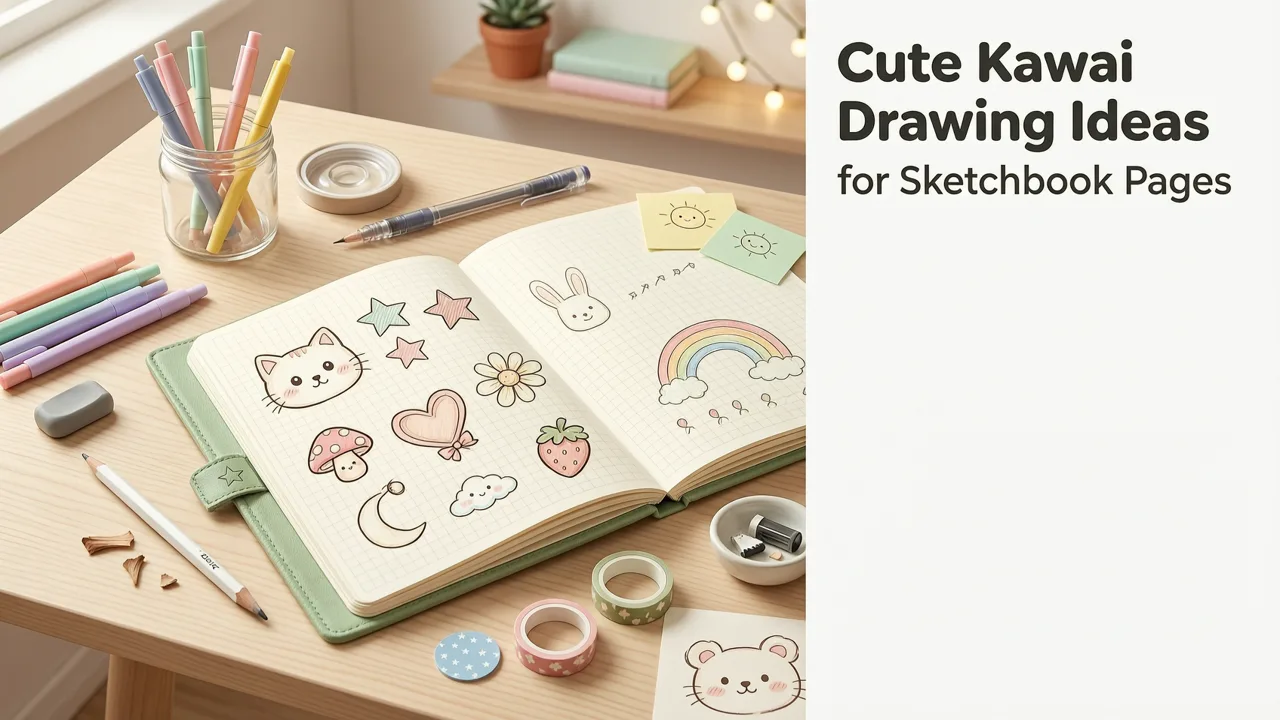
Food illustration is incredibly popular in sketchbooks. These subjects are forgiving, fun, and look great when shaded. If you love this aesthetic, you will definitely enjoy our collection of 25 Cute Kawaii Drawing Ideas for Sketchbook.
- 21. A Slice of Pizza: A classic triangle shape with fun, organic topping details.
- 22. A Frosted Donut: Perfect for practicing wavy icing lines and sprinkle placement.
- 23. A Sushi Roll: Simple cylinders with textured rice and clean ingredient lines.
- 24. An Ice Cream Cone: Great for drawing a perfect scoop and a cross-hatched cone.
- 25. A Cupcake: Allows you to practice swirling frosting and a pleated wrapper.
- 26. A Taco: Fun to trace the messy, organic spill of lettuce and cheese.
- 27. A Cup of Bubble Tea: Challenges you to draw a straw, a cup, and floating pearls.
- 28. A Watermelon Slice: Excellent for practicing seeds and the rind curve.
- 29. A Hamburger: Teaches you how to stack layers and draw sesame seeds.
- 30. A Coffee Bean: A tiny, detailed subject perfect for macro-level practice.
31-40: Nature, Plants, and Landscapes
Nature provides endless inspiration. Tracing botanical elements helps you relax and focus on organic, flowing lines rather than rigid geometry.
- 31. A Monstera Leaf: The ultimate trending plant to trace, full of deep cuts and holes.
- 32. A Pinecone: A brilliant exercise in drawing overlapping, scaled patterns.
- 33. A Sunflower: Helps you understand radial symmetry and seed spirals.
- 34. A Mushroom: Simple cap and stem shapes that are great for adding shading.
- 35. A Maple Leaf: Excellent for practicing sharp points and delicate veins.
- 36. A Cactus: Fun to draw ribs, spikes, and small blooming flowers.
- 37. A Cloud Formation: Teaches you how to draw soft, billowy, overlapping curves.
- 38. A Seashell: A beautiful spiral subject that improves your contour skills.
- 39. A Mountain Range: Great for practicing jagged peaks and atmospheric perspective.
- 40. A Raindrop: A simple teardrop shape that is perfect for practicing highlights and reflections.
41-50: Pop Culture, Characters, and Patterns
Ending with stylized art and patterns keeps your sketchbook sessions exciting. These ideas allow you to experiment with line weight and creative fills.
- 41. A Smiley Face: The most basic expression, perfect for warming up your circles.
- 42. A Retro Arcade Machine: Fun to trace the screen, buttons, and joystick.
- 43. A Simple Robot: Great for practicing boxy shapes, antennas, and dials.
- 44. A Skull: A classic art subject that teaches you about facial bone structure.
- 45. A Paper Crane: An elegant subject that tests your ability to draw sharp, precise folds.
- 46. A Crescent Moon: Simple and celestial, great for adding starry backgrounds.
- 47. A Treasure Map: Allows you to practice dashed lines, X marks, and topography.
- 48. A Mandala Pattern: The ultimate test of patience, symmetry, and repetitive design.
- 49. A Boombox: A nostalgic 80s subject full of circles, speakers, and handles.
- 50. A Polaroid Camera: A cute, boxy subject with a distinct flash and lens layout.
Traditional Tracing vs. AR Phone Tracing
If you are new to tracing, you might wonder how modern AR methods compare to older techniques. Here is a quick breakdown to help you choose the best workflow for your sketching sessions.
| Method | Setup Time | Equipment Needed | Accuracy & Control | Best For |
|---|---|---|---|---|
| Window Tracing | 5-10 Minutes | Sunny window, tape, printed image | Low (hard to see lines in bright light) | Quick, casual sketches when natural light is perfect. |
| Lightbox Tracing | 2 Minutes | Lightbox pad, printed image, thin paper | High (consistent backlight) | Artists who prefer physical paper and don't mind buying extra gear. |
| AR Smartphone Tracing | 1 Minute | Smartphone, AR drawing app, any paper | Very High (adjustable opacity and size) | Beginners and hobbyists who want a portable, zero-cost setup. |
As the table shows, AR tracing offers the best balance of convenience and accuracy. Because the overlay is digital, you can easily resize the image to fit your specific sketchbook page without needing to reprint anything.
Pro Tips for Getting the Most Out of Your Tracing Sessions
To ensure you are actually improving your art skills and not just copying lines, keep these expert tips in mind during your practice:
- Use a light pencil grip: Do not press hard into the paper. Use a light touch so you can easily erase and adjust your lines as you build confidence.
- Focus on line quality: Instead of making short, hairy, sketchy strokes, try to draw long, confident, continuous lines. This mimics the style of professional illustrators.
- Analyze as you trace: Do not go on autopilot. Pay attention to where the lines curve, how they intersect, and the negative space between shapes.
- Trace, then freehand: Once you have traced an image a few times, try drawing it from memory or observation. You will be surprised at how much your muscle memory has improved.
- Experiment with line weight: Use a thicker pen or press slightly harder on the outer轮廓 (contours) of your subject, and use lighter lines for inner details. This adds instant depth to your sketch.
Start Your Sketching Journey Today
Finding cool drawing ideas to trace is only the first step; the real magic happens when you put pencil to paper. By using augmented reality to guide your hand, you remove the intimidation factor and replace it with immediate, visible progress. Whether you are tracing a simple coffee mug or a complex mandala pattern, every line you draw builds the muscle memory needed to become a confident artist.
Grab your smartphone, open your favorite AR drawing app, and pick your first subject from the list above. Your sketchbook is waiting, and your next masterpiece is just a trace away.