Why Cute Doodle Ideas for Practice Are the Best Way to Start Drawing in 2026
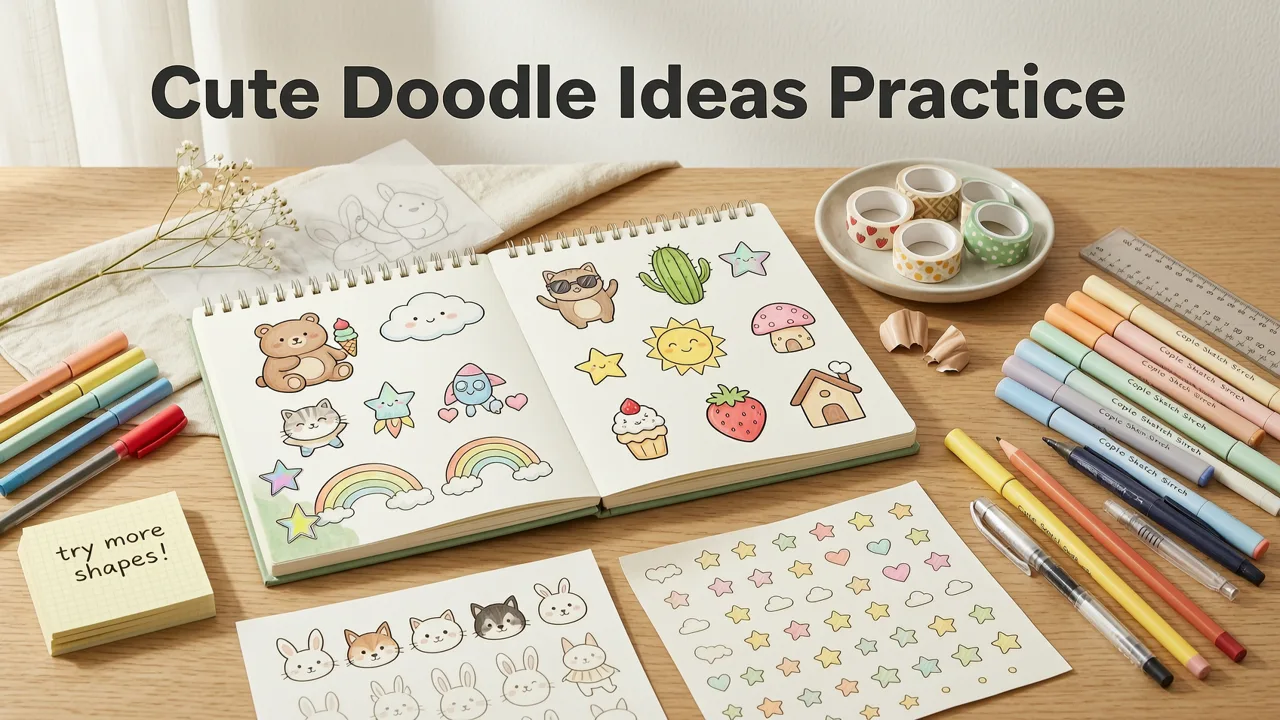
Looking for cute doodle ideas for practice? You're in the right place—and yes, it's absolutely okay to start with something sweet, simple, and smile-inducing. In 2026, the fastest way to build drawing confidence isn't with expensive tablets or complicated courses. It's with tiny, charming sketches that teach your hand to move with control while your brain learns to see shapes clearly.
Cute doodles are the perfect warm-up because they remove pressure. A wobbly line on a cartoon cat is endearing. A slightly lopsided cupcake still looks delicious. When your subjects are forgiving, you practice longer, experiment more, and improve faster. And when you pair those doodles with an augmented reality tracing overlay on your phone, you get a portable drawing coach that fits in your pocket.
Below you'll find 20 cute doodle ideas for practice, organized by difficulty, plus a simple method for tracing each one with your smartphone camera using AR Drawing. Whether you're a complete beginner or a hobbyist looking for a relaxing evening activity, this guide will get you sketching in minutes.
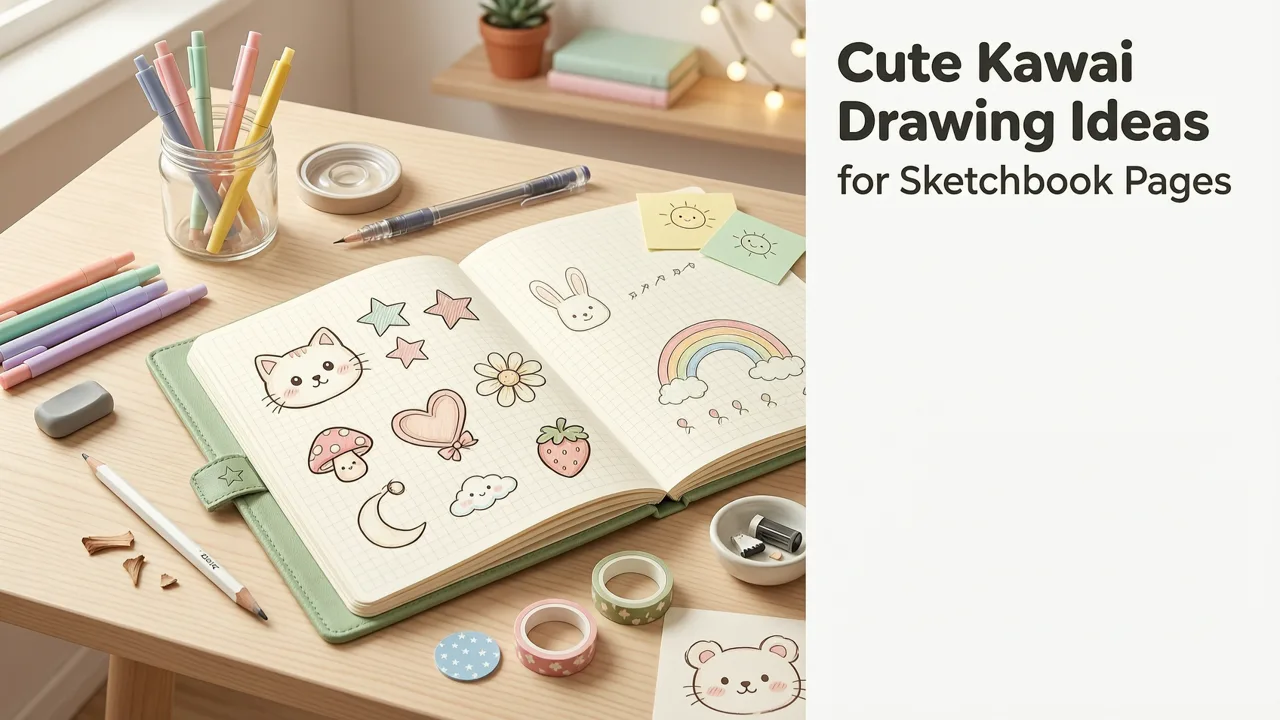
50 Cute Doodle Ideas for When You're Bored at School | Easy Beginner Doodles
by Shayda Campbell
What Makes a Doodle "Cute" (and Why That Matters for Practice)
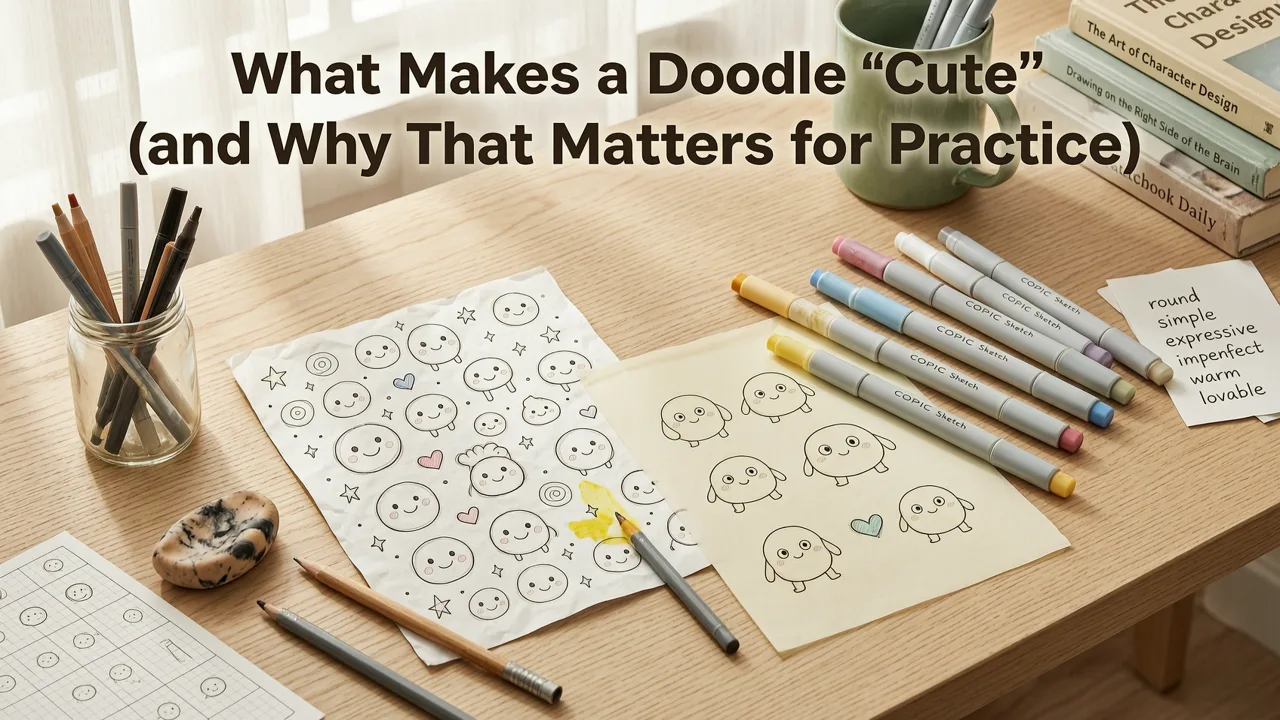
Before we dive into the list, let's talk about what actually makes a doodle feel cute. Understanding this helps you pick subjects that build real skills while keeping the process fun.
Simple Shapes With Soft Edges
Cute doodles rely on rounded geometry—circles, ovals, and gentle curves instead of sharp angles. This is great for practice because curved lines teach you wrist control and fluid motion, which are foundational for any drawing style you want to develop later.
Exaggerated Proportions
Big eyes, small bodies, oversized heads. The "cute" aesthetic gives you permission to play with proportions without worrying about realism. This freedom builds spatial awareness and helps you understand how shapes relate to each other on a page.
Minimal Detail With Maximum Personality
A single curved line can turn a circle into a smiling face. Two dots become eyes full of expression. Cute doodles teach you the art of saying more with less—a skill that translates directly to gesture drawing, character design, and even professional illustration.
How to Use Cute Doodle Ideas for Practice With AR Tracing
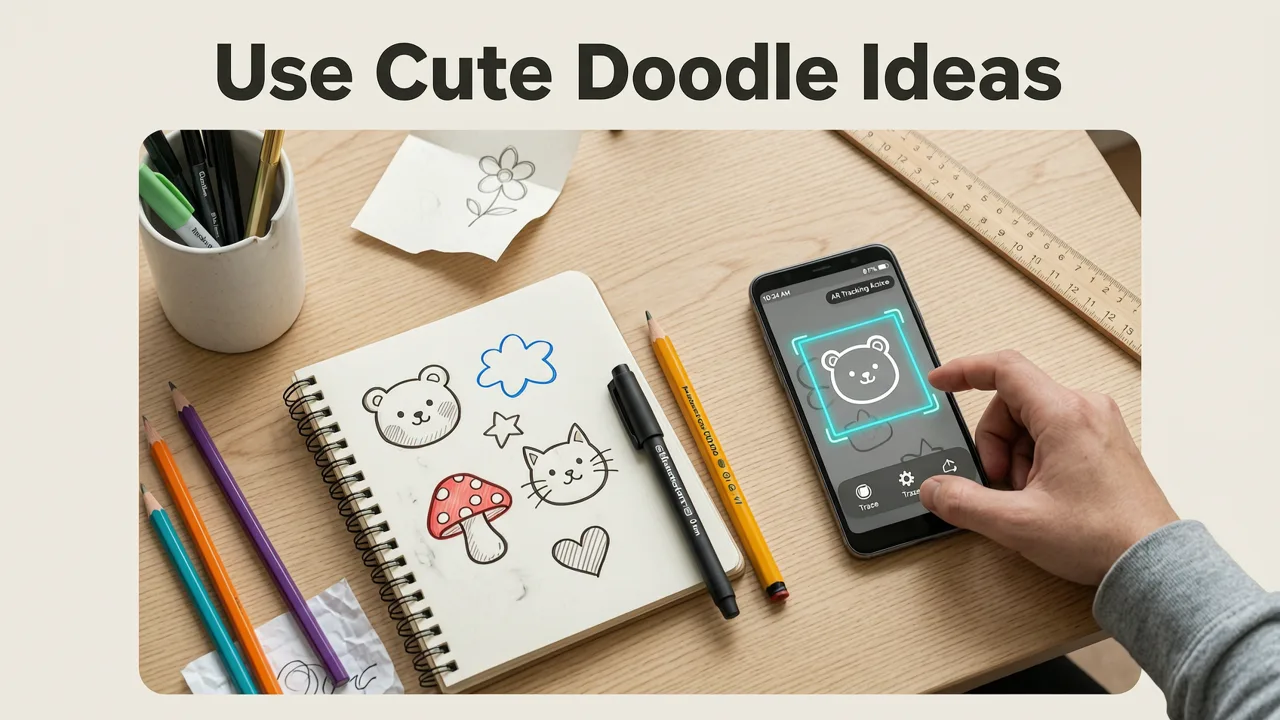
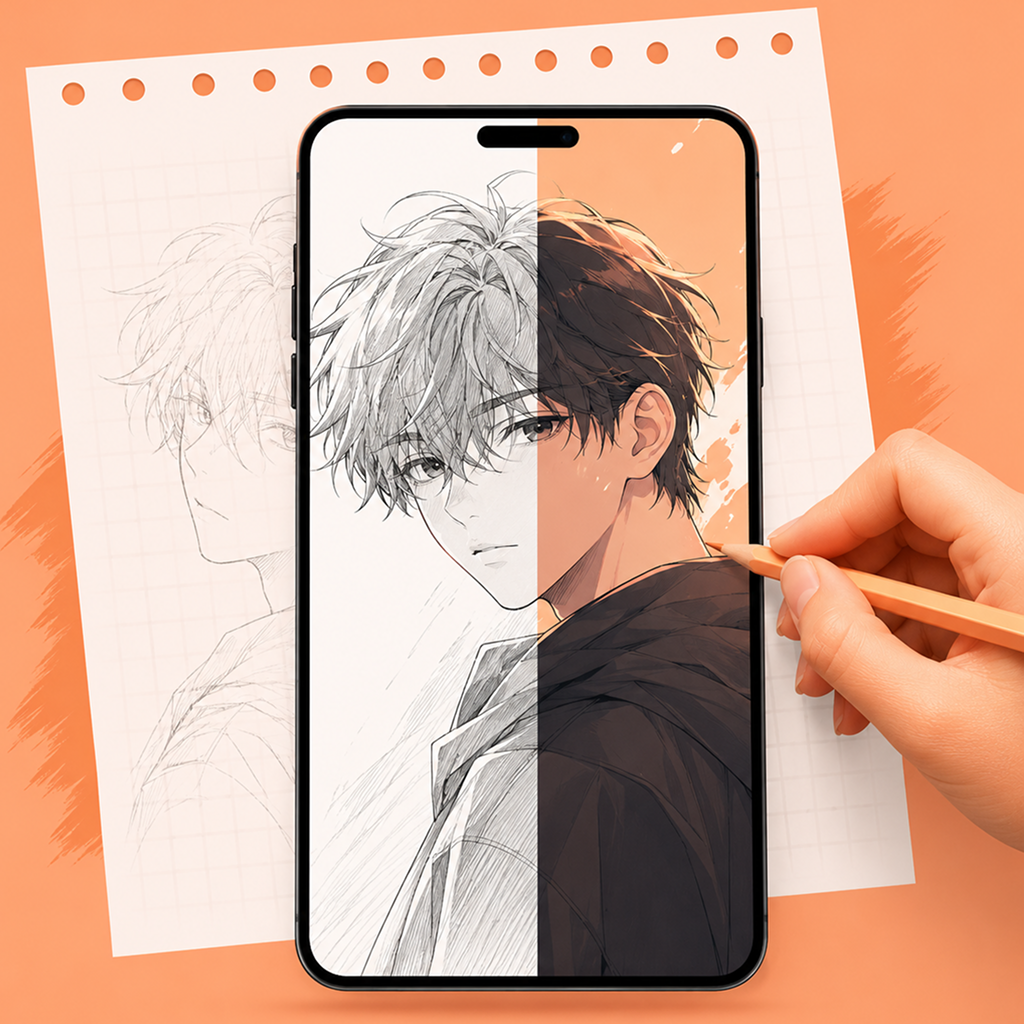
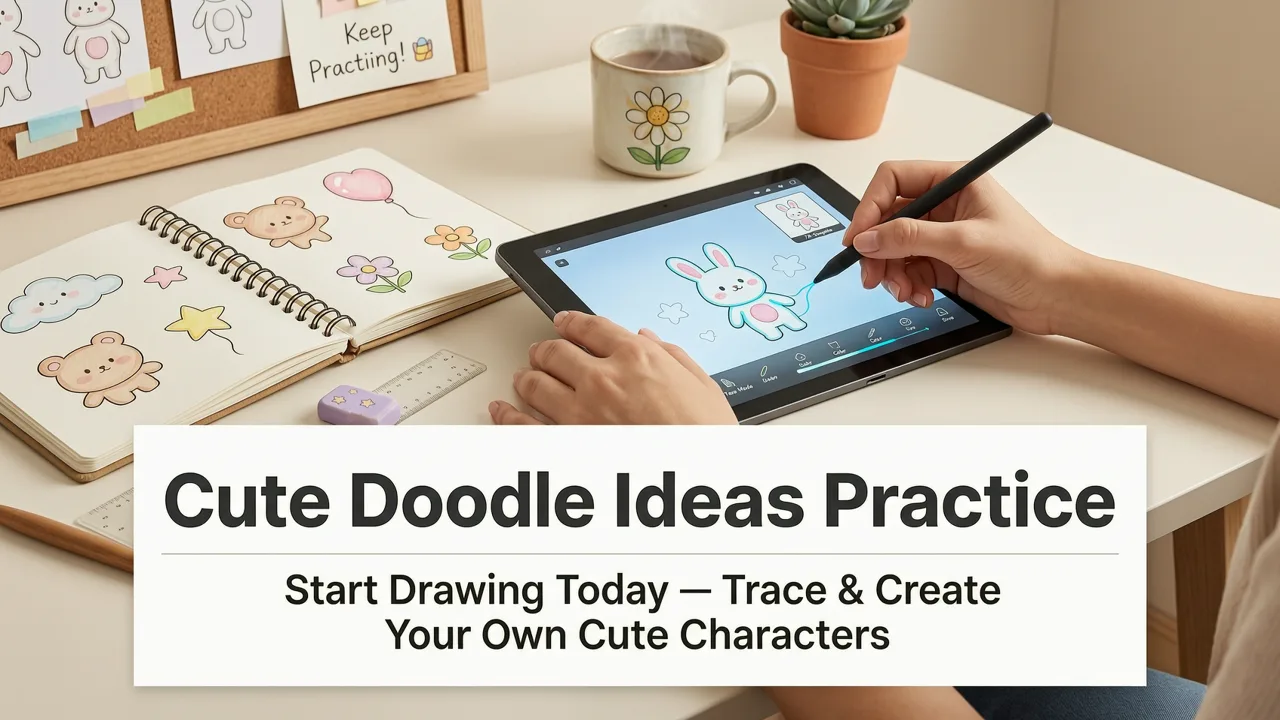
Here's the method that makes these doodle ideas especially effective in 2026. Instead of squinting at a reference image and guessing proportions, you use your phone as a live tracing guide.
- Open AR Drawing on your iPhone and choose or upload a reference image of the doodle you want to practice.
- Position your phone above your paper so the camera sees your drawing surface.
- Align the AR overlay with your paper. The image appears as a translucent guide right where you'll draw.
- Trace the outlines with your pencil, following the on-screen shapes as they sit on your page.
- Remove the overlay and add your own details—shading, expressions, little accessories—to make the doodle yours.
This process is explained in full in our guide on how to trace a picture on paper with your phone. The key benefit: you build muscle memory for real shapes instead of copying flat pixels on a screen.
10 Easy Cute Doodle Ideas for Practice (Beginner Level)
These doodles use only basic shapes—circles, ovals, and simple curves. If you've never drawn anything before, start here.
1. A Smiling Sun With Rosy Cheeks
Start with a circle for the sun's face. Add two small circles for eyes, a curved line for a smile, and tiny oval blush marks on each cheek. Rays can be simple straight lines or wavy curls—both look charming. This doodle teaches you symmetry and radial balance.
2. A Tiny Mushroom With a Polka-Dot Cap
A half-circle cap, a short rectangle stem, and scattered dots for texture. Mushrooms are forgiving because no two in nature look identical, so your "mistakes" just look organic. Practice shading the underside of the cap for a subtle 3D effect.
3. A Sleeping Moon Curled in a Blanket
A crescent shape for the moon, two closed curved lines for sleeping eyes, and a wavy blanket draped across the lower curve. Add a few tiny stars nearby. This doodle practices curved line continuity and negative space.
4. A Cupcake With a Cherry on Top
A trapezoid wrapper, a fluffy cloud-shaped frosting layer, and a small circle cherry with a curved stem. The wrapper lines teach you consistent spacing, and the frosting teaches you organic, flowing shapes.
5. A Round Panda Face
A large circle for the head, two smaller circles for eye patches, dot eyes, a tiny oval nose, and round ears. Pandas are the quintessential cute subject because their natural markings already look like simple geometric shapes.
6. A Little Potted Cactus
An oval pot, a tall oval cactus body, two curved arms branching off the sides, and tiny lines for spines. Add a small flower on top if you want extra charm. This doodle practices vertical symmetry and texture marks.
7. A Heart With Tiny Wings
A standard heart shape with two small wing curves on either side. It's symbolic, quick to draw, and looks adorable on cards, notebooks, and stickers. Practice making the wings mirror each other for balance.
8. A Teacup With Steam Swirls
A rounded cup shape, a curved handle, a small saucer line underneath, and three wavy steam lines rising from the top. The steam swirls are a great exercise in loose, confident line work.
9. A Bumblebee With a Happy Face
An oval body with three horizontal stripes, two small wing ovals on top, a round head with dot eyes and a smile, and tiny antennae. Bees are excellent for practicing repeated stripe spacing and small detail work.
10. A Cloud With a Rainbow Behind It
A puffy cloud shape made from overlapping circles, with three or four curved rainbow arcs peeking out from behind. This doodle practices layering—drawing the rainbow first, then the cloud on top to create depth.
10 Intermediate Cute Doodle Ideas for Practice
Once you're comfortable with basic shapes, these doodles add a bit more complexity—layered elements, small details, and gentle perspective.
11. A Kitten Peeking Out of a Mug
A rounded mug shape with a handle, and a kitten head peeking over the rim—two triangular ears, round eyes, a tiny nose, and whisker lines. The challenge here is proportion: making the kitten look like it actually fits inside the mug.
12. A Strawberry With a Leafy Crown
A heart-like body shape with tiny seed dots scattered across the surface and a leafy top made from overlapping pointed ovals. Seeds teach you controlled dot placement, and the crown practices overlapping organic shapes.
13. A Frog Sitting on a Lily Pad
A wide oval lily pad with a wedge cut out, and a round frog body on top with two bulging eye circles, a wide smile, and folded back legs. Frogs are wonderful for practicing overlapping forms and foreshortened limbs.
14. A Slice of Watermelon With Seeds
A triangular slice with a curved rind at the base, scattered teardrop-shaped seeds, and a few juice drip lines at the tip. This doodle practices perspective (the rind curve suggests a round fruit) and texture variety.
15. An Owl Perched on a Branch
A rounded body, two large circular eyes with pupils, a small triangular beak, ear tufts, and a simple branch line underneath with two tiny feet gripping it. Owls let you practice feather texture through small curved "U" shapes.
16. A Snowman With a Scarf
Three stacked circles of decreasing size, dot eyes and buttons, a carrot nose (triangle), stick arms, and a wrapped scarf with fringe lines at the ends. The scarf teaches you how to draw fabric wrapping around a form.
17. A Dinosaur With a Party Hat
A simple brontosaurus silhouette—rounded body, long neck, small head—with a triangular party hat on top and tiny confetti dots around it. The contrast between the gentle dinosaur curves and the sharp hat triangle creates visual interest.
18. A Bouquet of Tulips in a Jar
A rectangular jar with rounded corners, three or five tulip stems rising up, each topped with a cup-shaped flower. Add a ribbon around the jar for extra charm. This doodle practices repetition with variation—each tulip slightly different.
19. A Sleeping Cat Curled in a Circle
A circular body shape, a tail that wraps around the outside, a tucked-in head with closed eyes and tiny ears peeking out. The circular composition teaches you how to fit a subject within a defined boundary—a useful skill for sticker and logo design.
20. A Tiny Astronaut Floating With a Heart Balloon
A rounded helmet circle, a rectangular body suit, small glove and boot shapes, and a heart-shaped balloon connected by a curved string. This doodle combines multiple shape types and practices connecting elements with natural-looking lines.
Practice Tips to Get More From Every Doodle
- Draw each doodle three times. The first attempt is for familiarity, the second for accuracy, and the third for adding your own style.
- Use the AR overlay on your first attempt to learn the shapes, then try the second attempt freehand to test what you've absorbed.
- Time yourself. Set a two-minute timer per doodle. Speed forces you to commit to lines instead of over-correcting.
- Vary your paper. Try sketch pads, sticky notes, the margins of a notebook, or even a reusable drawing board. Different surfaces change how your pencil moves.
- Share your progress. Post your doodles online or keep a dated sketch journal. Seeing improvement over weeks is the best motivation to keep going.
Why AR Tracing Makes Doodle Practice More Effective
Traditional tracing with paper and a lightbox works, but it's bulky and not always available. AR Drawing solves this by projecting the reference image directly onto your paper through your phone's camera. You see both the guide and your pencil at the same time, in real space.
| Method | Portability | Setup Time | Best For |
|---|---|---|---|
| AR Drawing App (iPhone) | Excellent — phone only | Under 30 seconds | On-the-go practice, beginners learning proportions |
| Traditional Lightbox | Low — requires equipment | 2–5 minutes | Detailed ink work, larger formats |
| Grid Method | Moderate — paper and ruler | 5–10 minutes | Scaling up reference images |
| Freehand Guessing | Excellent | Zero | Advanced artists building confidence |
For beginners working through cute doodle ideas for practice, AR tracing offers the fastest feedback loop. You see immediately where your line diverges from the guide, adjust in real time, and build accurate hand-eye coordination without frustration.
Where to Find More Cute Doodle Inspiration
If you want to keep your practice sessions fresh, rotate between different themes. We've put together themed guides that pair perfectly with AR tracing:
- For animal lovers, our easy cute animals to sketch guide offers adorable creatures with AR tracing tips.
- For a broader mix of subjects, check out our collection of cute things to draw for beginners—everything from food to fantasy characters.
The beauty of doodle practice is that there's no wrong answer. A crooked line becomes a whisker. A smudge becomes a shadow. Every mark is a step forward.
Final Thoughts: Start Small, Sketch Often
The best doodle practice session is the one you actually do. Pick one idea from this list, open AR Drawing on your iPhone, and spend ten minutes tracing and personalizing it. Do that daily, and within a month you'll notice dramatically improved line confidence, better proportions, and a growing library of cute characters you can draw from memory.
Cute doodle ideas for practice aren't just filler—they're the building blocks of real drawing skill wrapped in something genuinely enjoyable. So grab your pencil, prop up your phone, and let's make something adorable today.
Ready to start? Download AR Drawing on iPhone and trace your first cute doodle in under two minutes.