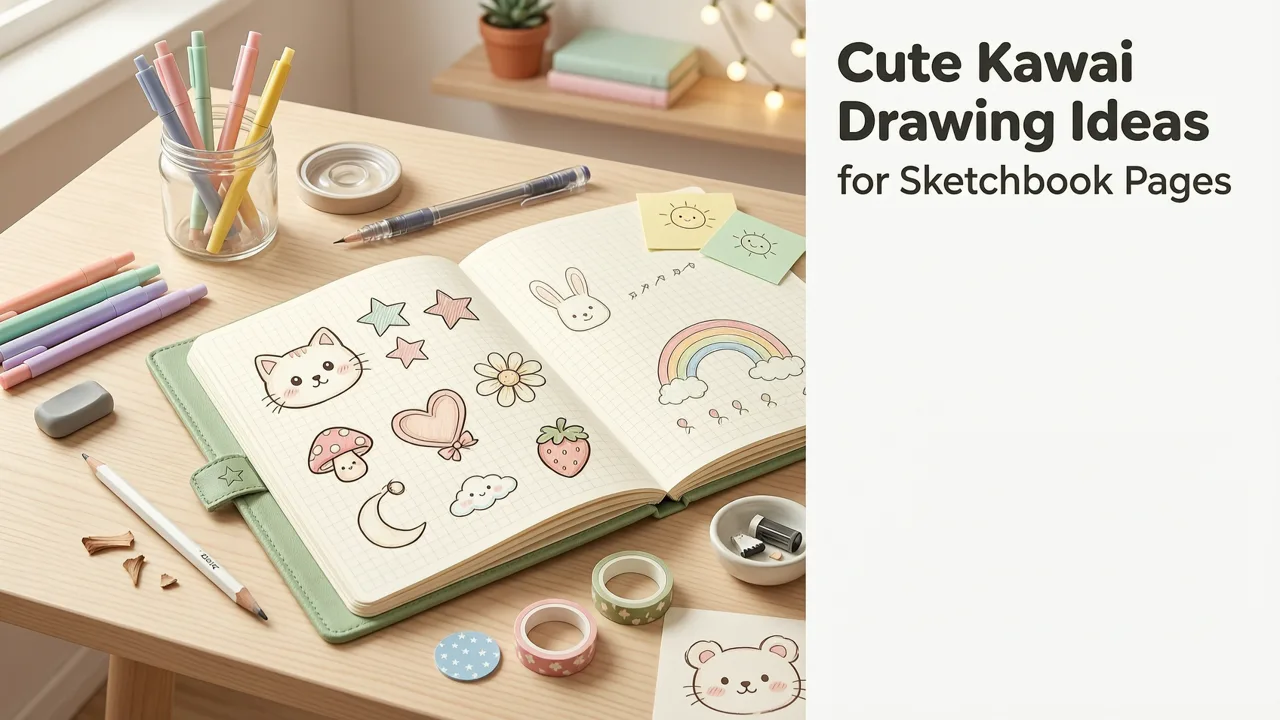
Looking for cute things to draw for beginners? You’re in the right place—and yes, it’s *absolutely* okay to start with something sweet, simple, and smile-inducing. In 2026, learning to draw isn’t about perfection or pressure—it’s about joy, muscle memory, and showing up with curiosity. Whether you’re sketching on printer paper at your kitchen table or using your iPhone as a smart tracing guide, the cutest subjects are often the most effective for building foundational hand-eye coordination, line control, and observational confidence.
Below, we’ve curated 15 cute things to draw for beginners—all chosen for their gentle shapes, forgiving proportions, and high ‘aww’ factor. Each idea includes why it works for new artists, how to simplify it, and how AR Drawing (the only iOS app built specifically for real-paper tracing in 2026) makes practicing them even more effective. No fancy gear needed—just your phone, a pencil, and 10 minutes of playful focus.
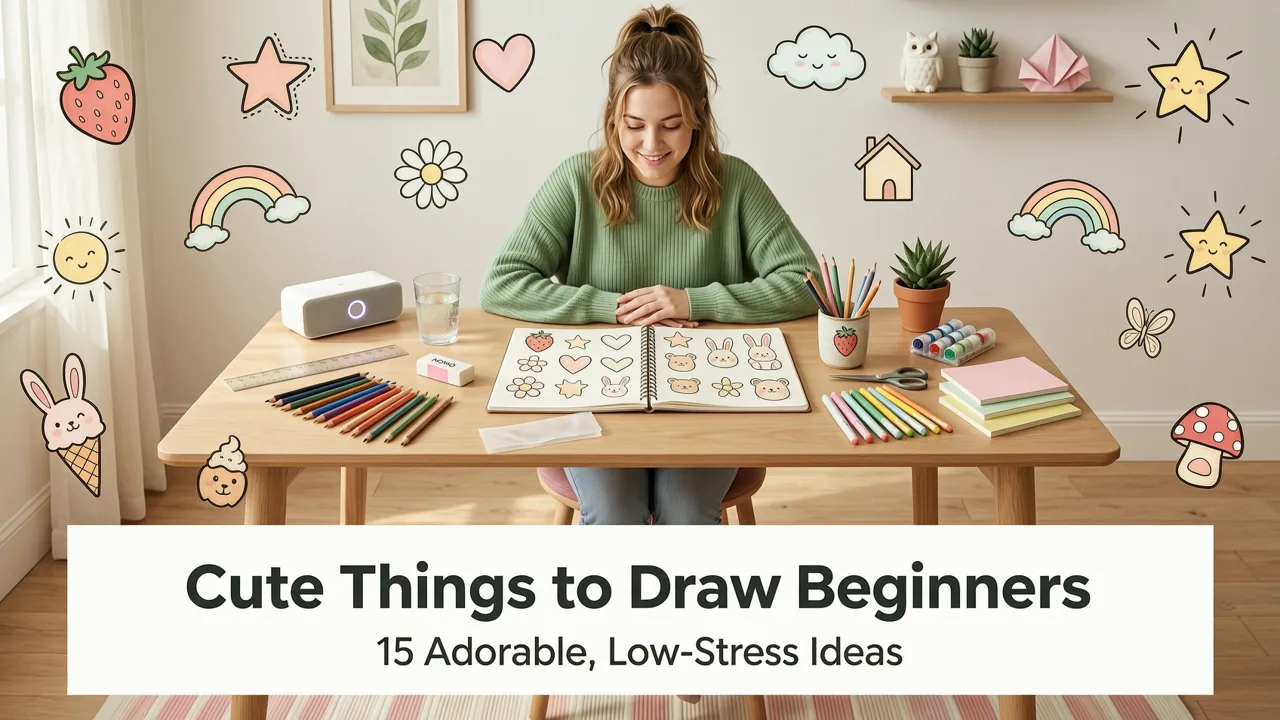
Cute Things to Draw for Beginners: 15 Adorable, Low-Stress Ideas
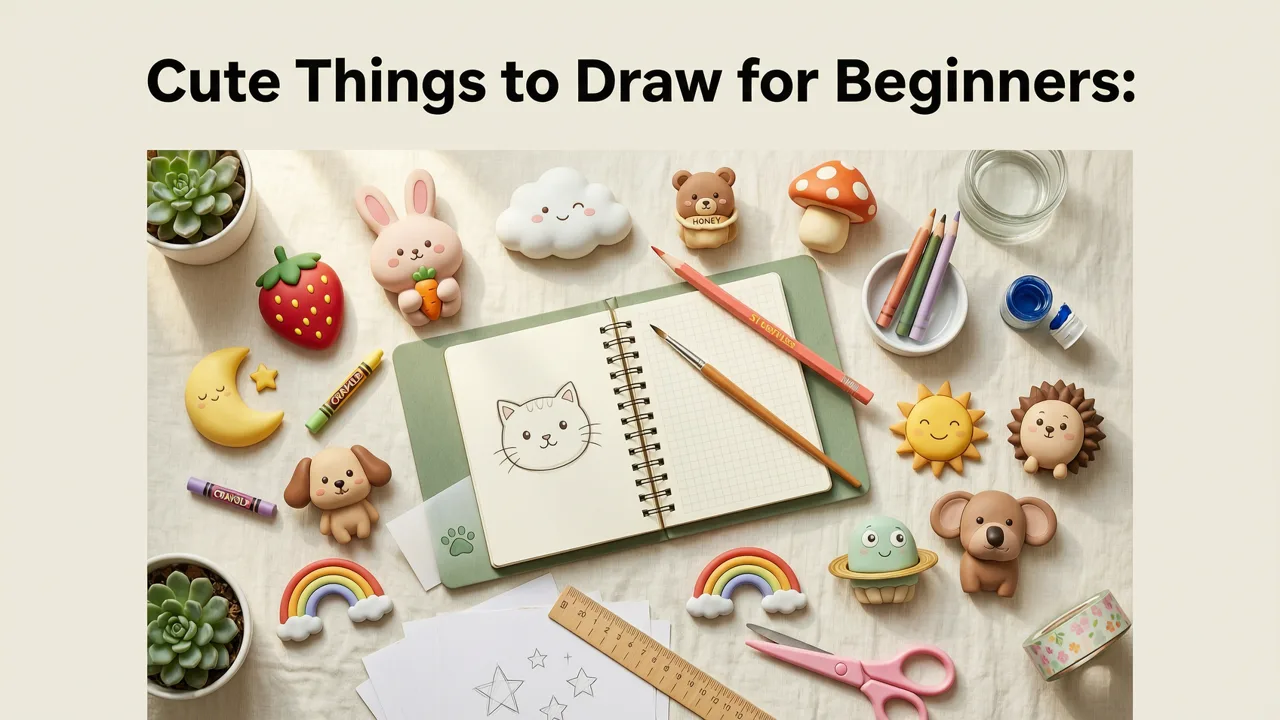
These aren’t just random ‘kawaii’ picks—they’re pedagogically sound starting points. Each subject reinforces a specific beginner skill: symmetry, curve control, negative space awareness, or light/shadow intuition—all while keeping your inner critic quiet and your pencil moving.
How To Draw A Cute Vanilla Ice Cream Kitten
by Art for Kids Hub
1. A Sleeping Kitten (Curves & Soft Edges)
A curled-up kitten is one of the most forgiving first subjects. Its rounded body, closed eyes, and simplified facial features teach gentle contour lines and soft pressure variation. Skip the tiny whiskers at first—focus on the oval head, bean-shaped body, and subtle ear curves. Bonus: kittens naturally encourage light, feathery strokes, which helps beginners break the habit of pressing too hard.
2. A Doodle Heart with Tiny Wings (Symbolic Simplicity)
Hearts are universal, familiar, and endlessly adaptable. Add two tiny, lopsided wings (think butterfly wings drawn with three gentle strokes each), and you’ve got a whimsical, emotionally resonant icon. This combo builds confidence in symmetry, repetition, and intentional ‘imperfection’—because those slightly uneven wings? They’re what make it charming, not flawed.
3. A Cupcake with Sprinkles (Shape Layering & Detail Control)
Start with a simple trapezoid (cup), add a cloud-like swirl (frosting), then drop in 4–5 scattered sprinkles. That’s it. This teaches layering (drawing base shape first, then adding on top), scale contrast, and how to stop *before* over-detailing. Pro tip: Use AR Drawing to overlay a photo of your favorite cupcake—align it over your paper, trace the outline, then freehand the sprinkles afterward. It bridges guided practice and creative choice.
4. A Blushing Cloud (Personification & Expression)
Draw a fluffy, puffy cloud (think cotton balls stacked gently), then add two small circles for eyes and a soft, upward-curved line for a shy smile. A single pink blush mark on each cheek completes it. This introduces expressive simplicity—how minimal marks convey mood—and trains your eye to see proportion in abstract forms. It’s also a fantastic warm-up before tackling human faces.
5. A Snail with a Spiral Shell (Spiral Confidence & Patience)
The snail’s spiral shell is a gift for beginners. Unlike forced perspective or complex anatomy, it’s a natural, repeatable curve that builds hand steadiness. Start with the oval body, then slowly coil a smooth, widening spiral outward from the center. Don’t rush—the goal isn’t speed, but smooth, connected motion. Try tracing a spiral image using how to trace a picture on paper with your phone to feel the rhythm before drawing freehand.
6. A Pair of Oversized Sunglasses (Negative Space Practice)
Draw two large, rounded lenses connected by a simple bridge, then *shade around them*, leaving the lenses white. This flips the script—instead of drawing the object, you’re drawing the space *around* it. It builds spatial awareness and reduces the fear of ‘getting the shape wrong.’ Plus, oversized sunglasses are inherently fun and forgiving—if one lens is slightly bigger? Now it’s ‘vintage cool.’
7. A Bumblebee with Stripes (Rhythm & Repetition)
Two ovals (head + body), six thin legs (three per side), two simple wings, and three bold black stripes across the yellow body. The stripe rhythm teaches consistency and spacing without demanding precision. It’s also a great subject for experimenting with texture—try cross-hatching the stripes or stippling the wings once you’re comfortable.
8. A Tiny House with a Chimney and Smoke (Structure & Whimsy)
A square base, triangle roof, door, two windows, a little chimney, and three wavy smoke lines curling upward. This introduces basic architectural elements (angles, alignment, hierarchy) while keeping it light and story-driven. Ask yourself: ‘Where is the sun?’ Then shade the side opposite to build early light logic. For extra support, import a cozy cottage photo into AR Drawing App Download and trace the silhouette first.
9. A Smiling Sun with Rays (Radial Symmetry & Bold Lines)
Draw a circle, then add 8–12 straight rays—some longer, some shorter, all radiating out like gentle spikes. Keep the face simple: two dots for eyes, a wide U-shaped smile. This builds confidence in radial layouts and encourages strong, decisive strokes (no timid scribbles!). It’s also deeply satisfying to color in later—great for pairing drawing with mindfulness.
10. A Sushi Roll (Cylinder Basics & Pattern)
One horizontal oval (the roll), a few short parallel lines across the top (nori seaweed), and three evenly spaced dots (fish eggs or sesame seeds). This teaches cylindrical form in 2D, consistent spacing, and how small repeated elements create visual interest. It’s unexpectedly calming to draw—and delightfully unexpected as a ‘cute’ subject!
11. A Teddy Bear Sitting Cross-Legged (Gesture & Simplified Anatomy)
No joints, no complex fur—just a round head, a slightly wider oval body, stubby arms and legs, and two button eyes. Focus on the *pose*: its gentle tilt, the way its arms rest on knees. This introduces gesture drawing (capturing feeling over realism) and builds empathy for figure work later. Trace a plushie photo with AR Drawing to lock in proportions, then redraw from memory.
12. A Raincloud with One Big Raindrop (Emotion & Minimalism)
A soft, bottom-heavy cloud shape, and *one* teardrop falling from its center—slightly elongated, with a tiny highlight. That single drop tells a whole story: gentle rain, quiet mood, softness. It teaches intentionality (why include *this* detail?) and how minimal marks carry emotional weight. Perfect for journaling or greeting cards.
13. A Potted Cactus with Two Arms (Playful Anthropomorphism)
A simple pot (rectangle + curved base), a squat, segmented cactus body, two bent ‘arms’ waving hello, and three tiny flowers on top. This merges structure (pot), organic growth (cactus segments), and character (arms + flowers). It’s joyful, low-stakes, and great for practicing varied line weights—thick for the pot, thin for the flowers.
14. A Hot Cocoa Mug with Marshmallows (Warmth & Texture Contrast)
A wide mug (trapezoid with rounded top), steam rising as two loose ‘S’ curves, and 3–4 overlapping marshmallows (soft ovals with gentle shading). This introduces temperature cues (steam = movement, warmth), texture contrast (smooth mug vs. pillowy marshmallows), and overlapping—key for creating depth, even in simple scenes.
15. A Moon with a Winking Eye (Nighttime Charm & Asymmetry)
A crescent moon shape (thin C), a single large eye peeking from the curve, and a tiny, upward-twitching eyelid. That wink breaks symmetry intentionally—teaching beginners that asymmetry can be expressive, not ‘wrong.’ It’s also a beautiful metaphor: drawing isn’t about rigid rules. It’s about personality, play, and showing up exactly as you are.
Why These ‘Cute Things to Draw for Beginners’ Actually Work
It’s not just about aesthetics—there’s real pedagogy behind choosing cute, approachable subjects. Here’s why this list delivers measurable progress:
- Low cognitive load: Familiar, friendly shapes reduce mental resistance—so you actually *start*, instead of staring at a blank page.
- Forgiving proportions: A lopsided cupcake or wonky cloud still reads clearly. That builds confidence faster than forcing anatomical accuracy.
- Natural skill scaffolding: Each subject targets one core beginner skill (curves, symmetry, negative space, etc.) without overwhelming you with multiple demands at once.
- Emotional resonance: Drawing something you find genuinely sweet or comforting activates dopamine—not stress. And in 2026, neuroscience confirms: positive emotion directly improves motor learning and retention.
That’s why simply choosing cute things to draw for beginners isn’t ‘cheating’—it’s strategic self-kindness. And when paired with smart tools, it becomes powerful practice.
How AR Drawing Makes These Subjects Even More Effective (2026 Edition)

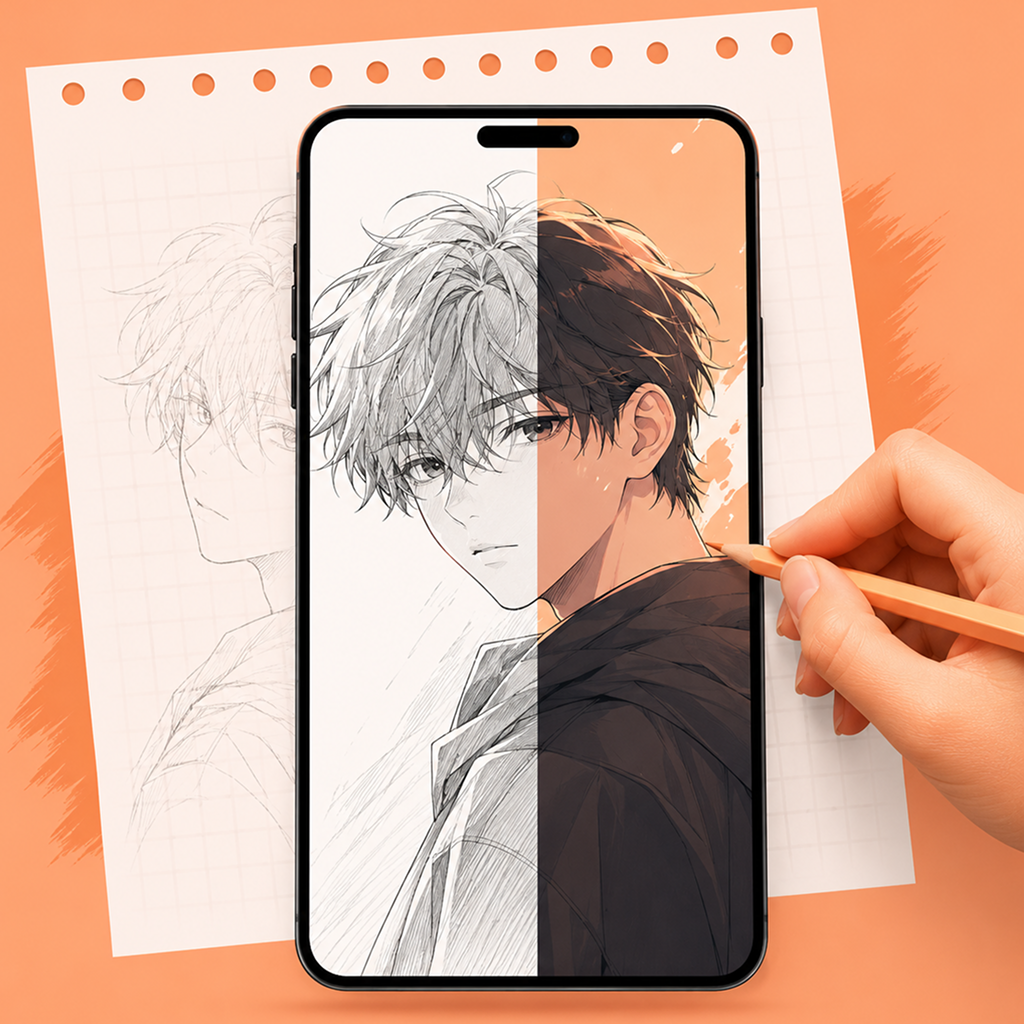
In 2026, the best way to learn drawing isn’t through endless YouTube tutorials or expensive classes—it’s by doing, with immediate, tactile feedback. That’s where AR Drawing shines. Unlike generic camera-overlay apps, AR Drawing is purpose-built for *real-paper tracing* on iPhone—meaning you’re always practicing on physical media, building real pencil control and paper awareness.
Here’s how it elevates your ‘cute things to draw’ practice:
- Instant alignment calibration: Its 2026 update includes auto-edge detection—point your camera at your blank paper, and AR Drawing instantly recognizes the surface and locks the image overlay in place (no fiddling with sliders or guesswork).
- Adjustable opacity & grid overlays: Trace the outline first at 70% opacity, then lower it to 30% and refine details—or toggle on a light grid to check proportions as you go.
- No subscription, no watermarks: As the best free tracing app for iPhone in 2026, it removes friction so you can focus purely on learning—not paying.
- iOS-optimized performance: Runs smoothly on iPhone 12 and newer, even with complex images—no lag, no crashes, no ‘processing…’ delays breaking your flow.
Try this: Pick #3 (cupcake) or #11 (teddy bear) from the list above. Import a reference image into AR Drawing, align it over your paper, and trace just the outer shape. Then, put your phone down and add the sprinkles or button eyes freehand. That blend—guided foundation + creative extension—is where real skill grows.
Pro Tips for Drawing Cute Things (Without Getting Stuck)
Even with adorable subjects, beginners often hit common roadblocks. Here’s how to glide past them:
Tip 1: Embrace the ‘Ugly First Draft’ Rule
Your first sketch doesn’t need to be shareable—it needs to be *done*. Set a timer for 90 seconds per subject. No erasing. No judging. Just move your pencil. Speed forces instinct over overthinking, and 90% of breakthroughs happen in those messy, unpolished attempts.
Tip 2: Use Light, Reversible Lines First
Begin every drawing with a very light, almost invisible ‘ghost line’—especially for curves and symmetry. Think of it as sketching with breath, not pressure. You’ll build accuracy without the fear of permanent mistakes.
Tip 3: Steal Like an Artist (Ethically!)
Find a photo of your chosen subject (e.g., ‘sleeping kitten side view’), import it into AR Drawing, and trace it *once*. Then close the app and redraw it from memory—keeping only the essence: the curve of the back, the tilt of the head. That’s how muscle memory forms.
Tip 4: Rotate Your Paper, Not Your Hand
Struggling with a tricky curve (like a snail’s spiral)? Turn your paper 90 degrees instead of twisting your wrist. Your arm moves more naturally horizontally—reducing fatigue and improving line smoothness.
What to Do After You’ve Drawn Your First Cute Thing
Celebrate! Seriously—put a star next to it, text it to a friend, or stick it on your fridge. Then, level up gently:
- Add ONE new element: Drew a heart? Now add tiny stars floating around it.
- Change ONE variable: Made a smiling sun? Try a sleepy sun (closed eyes, downward mouth).
- Trace, then transform: Use AR Drawing to trace a bumblebee, then turn it into a robot bee (add antennae bolts, geometric wings).
This is how ‘cute things to draw for beginners’ become springboards—not endpoints. Progress isn’t linear; it’s playful, iterative, and full of tiny victories.
Comparison: Cute Drawing Subjects vs. Traditional Beginner Exercises
Many traditional ‘learn to draw’ resources start with rigid drills: contour drawing of hands, blind drawing of shoes, or value scales. While valuable, they can feel cold or intimidating. Cute subjects offer a warmer, more emotionally intelligent alternative—without sacrificing skill development. Here’s how they compare:
| Skill Targeted | Traditional Drill Example | Cute Subject Equivalent | Why the Cute Version Works Better for Most Beginners |
|---|---|---|---|
| Line Confidence | Blind contour drawing of a coffee mug | Tracing a sleeping kitten’s outline with AR Drawing | Lower stakes + instant visual payoff → higher motivation to repeat |
| Symmetry Awareness | Drawing a perfectly mirrored face grid | Sketching a blushing cloud with balanced cheeks | Abstract + forgiving → less fear of ‘failure,’ more focus on rhythm |
| Proportion Sense | Measuring hand-to-head ratios on a model | Placing sprinkles evenly on a cupcake | Clear, contained frame + intuitive spacing cues (‘space between sprinkles ≈ sprinkle width’) |
| Gesture & Pose | 30-second figure sketches from life | Redrawing a teddy bear sitting cross-legged from memory | Familiar, non-threatening subject → frees brain to focus on tilt, weight, balance |
Both paths build skill—but the cute path meets beginners where they are: curious, kind to themselves, and ready to enjoy the process.
Final Thought: Cute Isn’t ‘Less Than’—It’s Strategic
In 2026, the most effective learning tools honor human psychology—not just technique. Choosing cute things to draw for beginners isn’t about avoiding challenge. It’s about choosing engagement over exhaustion, joy over judgment, and consistency over perfection. Every wobbly cupcake, every lopsided cloud, every smiling sun you draw is proof that you’re showing up—and that’s where real art begins.
Ready to try one? Grab your iPhone, download AR Drawing (it’s free, fast, and built for real paper), and pick any subject from this list. Your first traced, then transformed, then cherished drawing is just minutes away.
👉 Get started with AR Drawing App Download for iPhone in 2026.