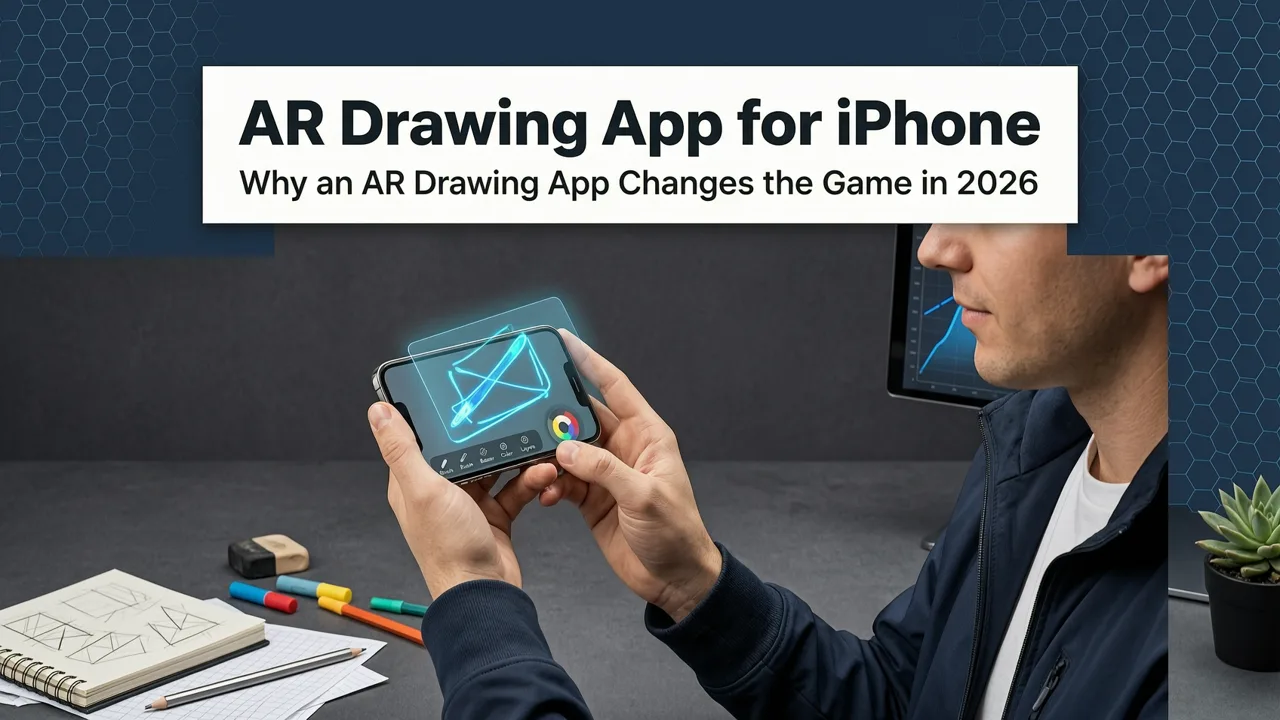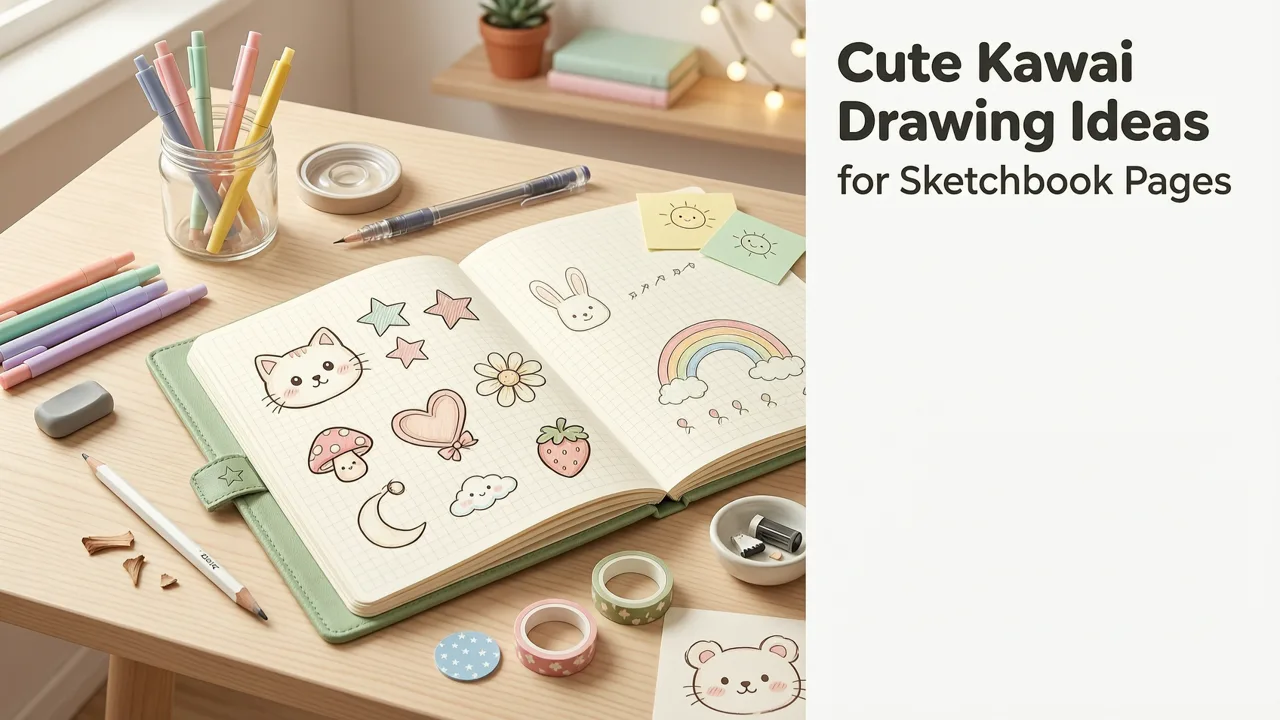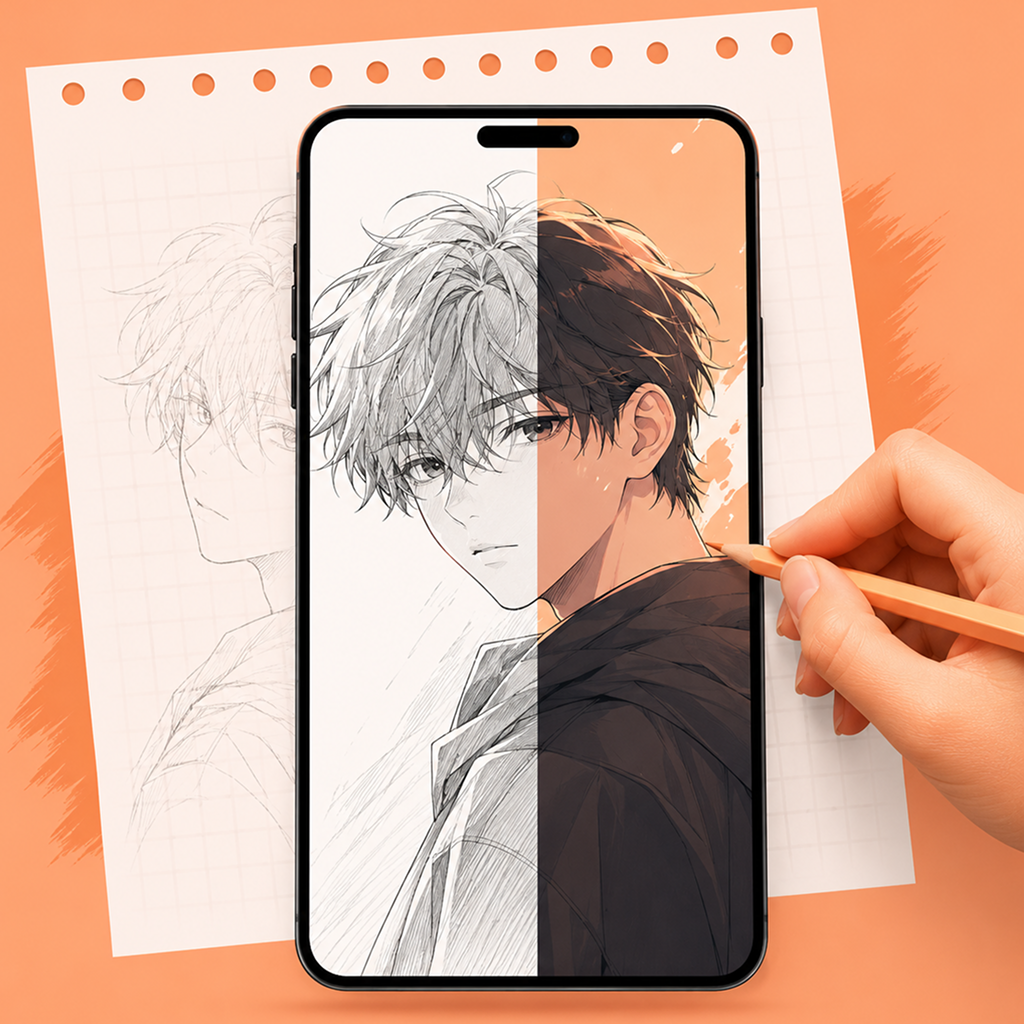

Want easy sketch ideas with phone that actually help you improve — not just fill a page? In 2026, you don’t need a drawing tablet, art studio, or years of practice. You just need your iPhone, a blank sheet of paper, and an AR tracing app like AR Drawing. This post gives you 15 tested, beginner-friendly sketch prompts optimized for real-world tracing — plus tips to turn each one into a confidence-building exercise.
Why Easy Sketch Ideas with Phone Work Better Than Ever in 2026
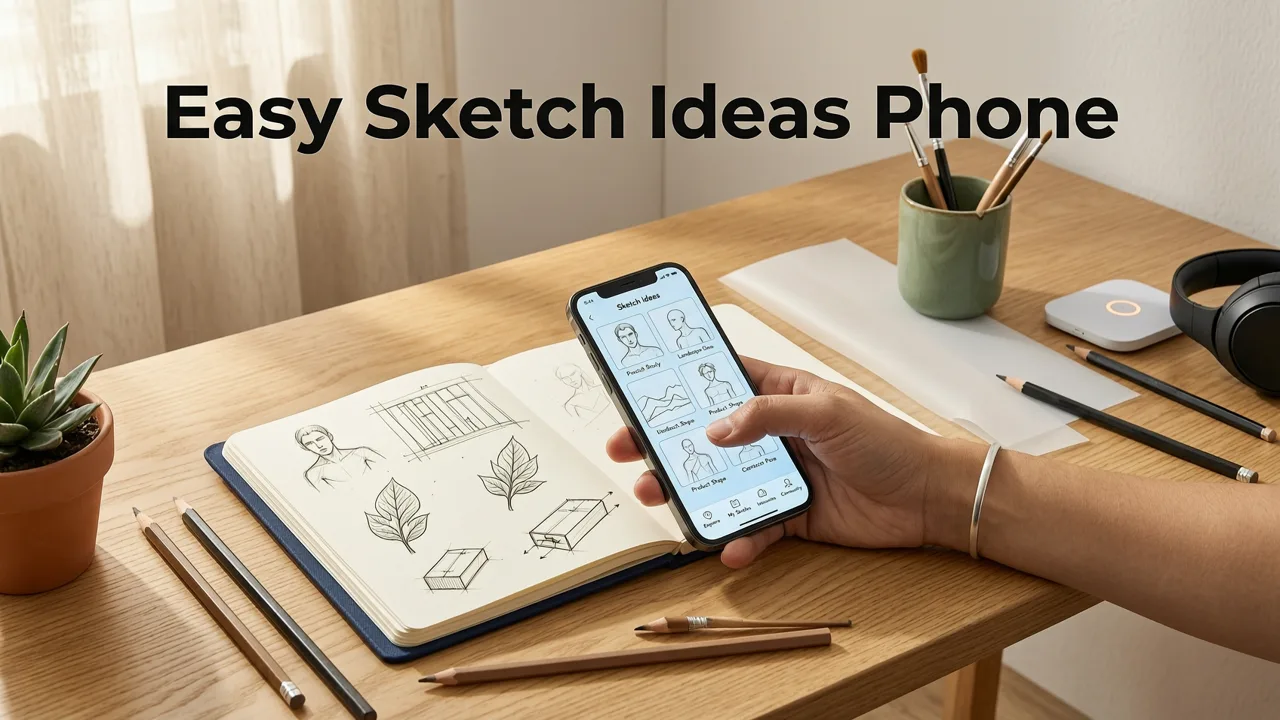
Let’s be honest: staring at a blank page is intimidating. And copying from a screen? Frustrating — unless your phone becomes part of the process. That’s where modern augmented reality (AR) tracing changes everything.
In 2026, smartphone cameras are sharper, AR alignment is near-instant, and apps like AR Drawing use on-device machine learning to lock images in place — even if you tilt or shift slightly while sketching. No lag. No recalibration. Just smooth, stable overlays that stay anchored to your paper.
A cute heart with wing drawing || Cute drawing ideas for beginners || Step by step drawing
by Sayah Arts
This means your easy sketch ideas with phone aren’t just placeholders — they’re precision-guided practice sessions. Each traced line strengthens hand-eye coordination, builds muscle memory, and teaches proportion *before* you jump into freehand. It’s like training wheels for your artistic brain — and they come off naturally as your confidence grows.
What Makes a Great “Easy Sketch Idea” for Phone Tracing?
Not every image traces well — especially when your goal is learning, not just copying. Here’s what we look for in 2026:
- Clear silhouette or strong contour lines (no fuzzy edges or heavy shading)
- Moderate detail level — enough to observe shape relationships, but not so much it overwhelms
- Real-world relevance — things you’ll recognize, draw again, or adapt later (e.g., leaves, mugs, hands)
- Scalable composition — fits comfortably on A4 or letter paper without zooming or cropping
- AR-friendly contrast — works well against white or light-colored paper under natural or desk lighting
All 15 ideas below meet those criteria — and many were stress-tested by real hobbyists using the 2026 step-by-step tracing method.
15 Easy Sketch Ideas with Phone (Tested & Optimized for AR Tracing in 2026)
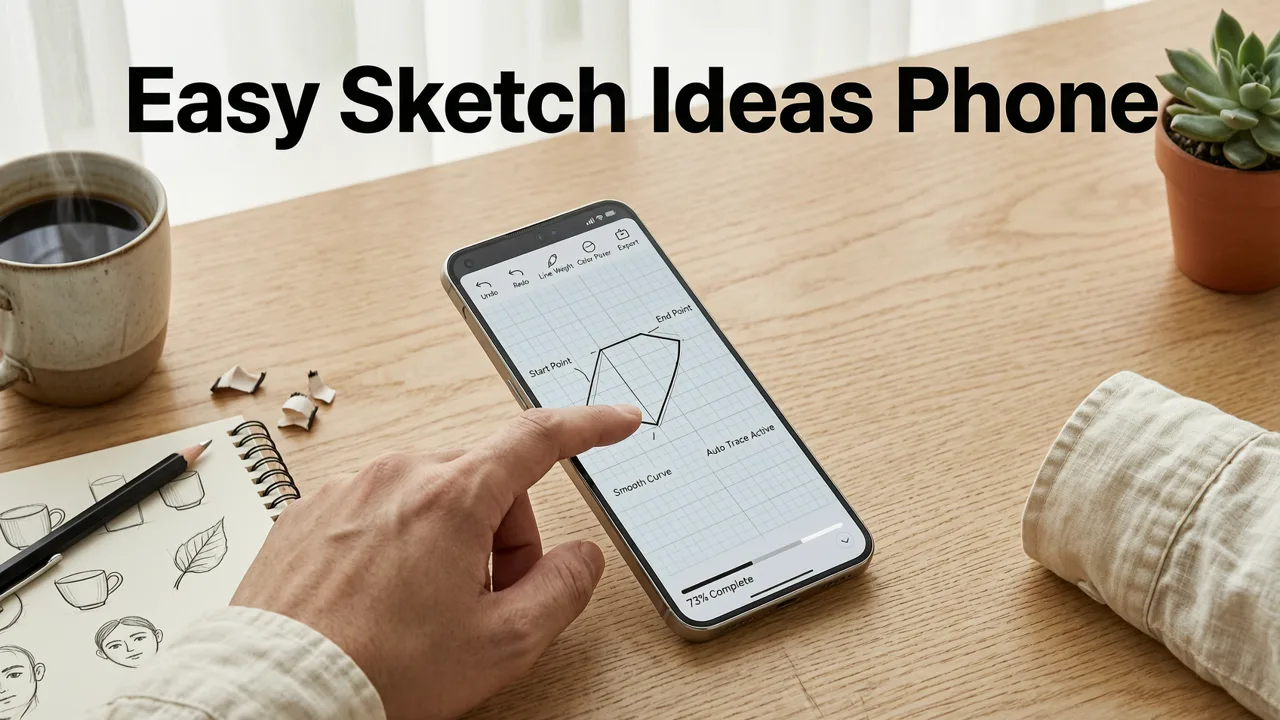
We’ve grouped these into categories based on skill focus — from foundational shapes to expressive details. Try one per day, or pick your favorite three to rotate through weekly.
1. A Single Maple Leaf (Front View)
Why it works: Clean veins, symmetrical lobes, and organic curves make this ideal for practicing flow and pressure control. Trace it slowly — notice how line weight changes where the stem meets the blade.
2. A Coffee Mug With Steam Swirl
Why it works: Combines geometric (cylinder + handle) and fluid (steam) elements. Great for understanding negative space — the steam curls *around* the mug, not just above it.
3. A Hand Holding a Pencil (Side View)
Why it works: Teaches gesture, foreshortening basics, and overlapping forms. Bonus: You’re literally drawing the tool you’ll use next.
4. A Simple House With Chimney and Two Windows
Why it works: Reinforces perspective fundamentals — parallel lines, roof angles, window proportions. Use a grid overlay in AR Drawing to check alignment.
5. A Dandelion Clock (Puffball Stage)
Why it works: Delicate radial symmetry trains your eye for balance and repetition. Start with the center seed cluster, then work outward — no rush.
6. A Spiral Notebook Lying Open
Why it works: Introduces subtle curvature (spine bend), texture (lined paper), and layering (pages overlapping). Skip shading — focus only on edge contours first.
7. A Cat’s Paw Print (Front View, Claws Retracted)
Why it works: Clear anatomy, rounded pads, and gentle spacing build observation skills. Also fun to personalize later with whiskers or fur strokes.
8. A Pair of Eyeglasses (Front-On, No Reflections)
Why it works: Symmetry + precision. The bridge, hinges, and lens rims reinforce spatial awareness and consistent line quality.
9. A Lemon Cut in Half (Cross-Section)
Why it works: Natural segmentation teaches how to break complex forms into repeatable units. Notice how membranes radiate from the center — like spokes on a wheel.
10. A Paper Airplane (Top-Down Folded View)
Why it works: Sharp folds, clean creases, and angular geometry strengthen your ability to interpret 3D folds in 2D space.
11. A Sunglasses Icon (Minimalist Line Art)
Why it works: Designed for clarity — no gradients, shadows, or textures. Perfect for building speed and consistency in line work.
12. A Simple Bird Perched on a Branch (Side Profile)
Why it works: Captures gesture, balance, and scale relationship (bird vs. branch thickness). Focus on posture first — head angle, leg placement, tail position.
13. A Lightbulb (Vintage Edison Style)
Why it works: Curves, coils, and glass transparency cues — all in one compact shape. Great for practicing controlled looping and tapering lines.
14. A Pair of Sneakers (Front View, Minimal Detail)
Why it works: Familiar object with layered forms (laces, tongue, sole). Helps train your eye to read depth through overlap and contour shifts.
15. A Sun With Eight Rays (No Face, Just Geometry)
Why it works: Radial symmetry + even spacing = instant feedback on consistency. Count rays aloud as you trace — it helps internalize rhythm and proportion.
How to Turn These Easy Sketch Ideas with Phone Into Real Progress
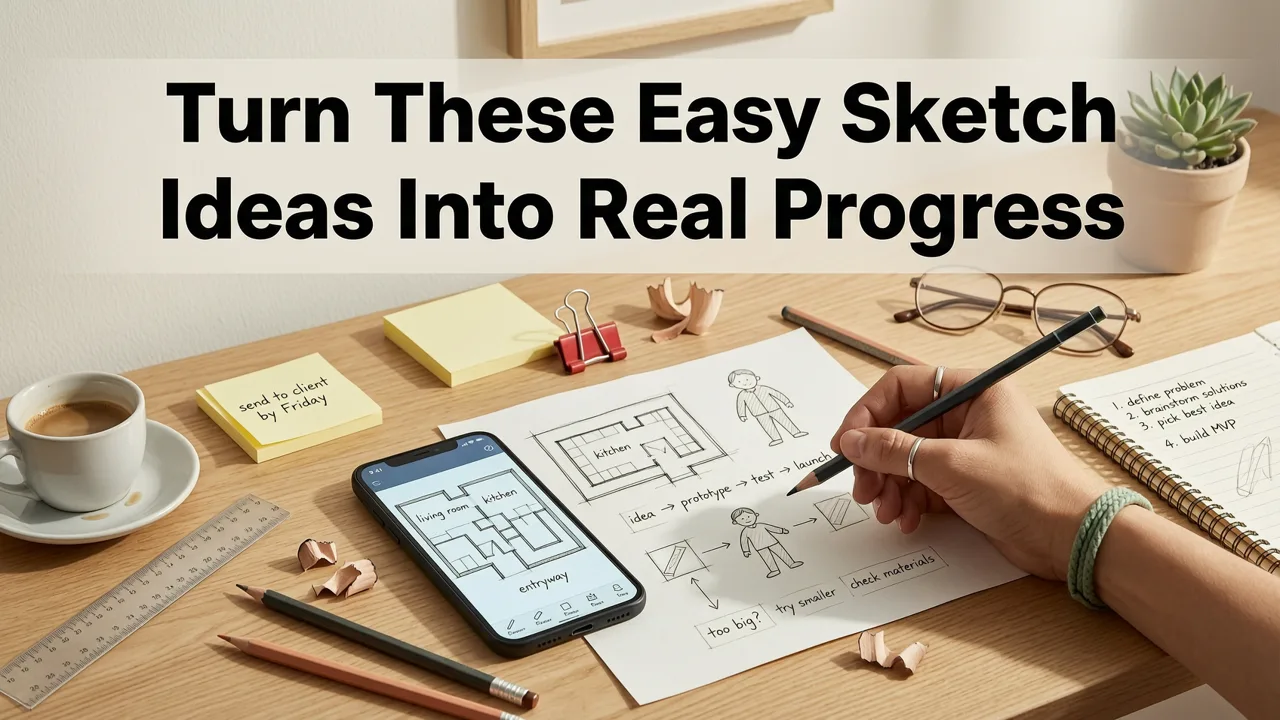
Tracing isn’t cheating — it’s scaffolding. But to grow, you need to go beyond the overlay. Here’s how to evolve each session in 2026:
Phase 1: Trace with Full Overlay (5–7 mins)
Use AR Drawing’s live camera mode. Align carefully. Trace slowly — lift your pencil only when necessary. Goal: accuracy, not speed.
Phase 2: Trace with 50% Opacity (3–5 mins)
Lower the overlay opacity in the app. Now you’re filling in gaps and estimating where lines continue. Your eye starts doing more work — and that’s where learning accelerates.
Phase 3: Freehand Recall (2–4 mins)
Hide the overlay. Redraw the same subject from memory — even if it’s rough. Compare side-by-side. Ask: What did I remember clearly? What vanished? That tells you where to focus next time.
Pro Tips for Getting the Most Out of Your Easy Sketch Ideas with Phone
These small tweaks make a big difference — especially if you’re just starting out:
- Light matters: Use a soft desk lamp or natural daylight. Harsh shadows confuse AR alignment. Avoid backlighting your paper.
- Stabilize your phone: Rest it on a stack of books or use a simple phone stand. Less hand fatigue = more focused tracing.
- Start small: Pick one idea per session — not three. Depth beats breadth when building neural pathways.
- Keep a “Trace & Reflect” journal: Jot down one thing you noticed (e.g., “The mug handle curves *more* than I thought”) — not just “I drew it.”
- Try inverted tracing: Flip your reference image upside-down before uploading. This disables your brain’s “symbol recognition” and forces pure shape observation.
What to Draw Next? Explore More Beginner-Friendly Prompts
If you loved these easy sketch ideas with phone, you’ll enjoy our full collection of 15 cool things to draw for beginners in 2026 — including seasonal themes (summer sandals, autumn pumpkins), expressive faces, and quick 2-minute warm-ups.
You might also like our easy sketch ideas for hobbyists, which dive deeper into botanicals, everyday objects, and stylized animals — all curated for AR tracing success.
Final Thought: Your Phone Is Already Your Best Art Tool
In 2026, “easy sketch ideas with phone” isn’t a workaround — it’s a smart, joyful, and deeply effective way to begin your drawing journey. You’re not waiting for the “right time” or the “perfect gear.” You’re showing up with what you have — and turning daily moments into steady progress.
So grab your phone, open AR Drawing, pick #1 (the maple leaf), and press “Trace.” Your first confident line is already waiting.
Quick-Reference Table: Top 5 Easy Sketch Ideas with Phone for First-Time Tracers
| Idea | Why It’s Great for Beginners | Time to Trace (Avg.) | Best Practice Focus |
|---|---|---|---|
| Maple Leaf | Clean outline, natural symmetry, familiar shape | 6–8 mins | Line flow & pressure control |
| Coffee Mug + Steam | Combines geometry + organic motion | 7–9 mins | Negative space & overlap |
| Hand Holding Pencil | Relevant, gestural, teaches foreshortening | 8–10 mins | Gesture & proportion |
| Dandelion Clock | Radiating symmetry, delicate detail | 5–7 mins | Bilateral balance & repetition |
| Sun With Rays | Pure geometry, instant feedback | 4–6 mins | Consistency & spacing |