How to Draw Cute Things Step by Step — The Short Answer
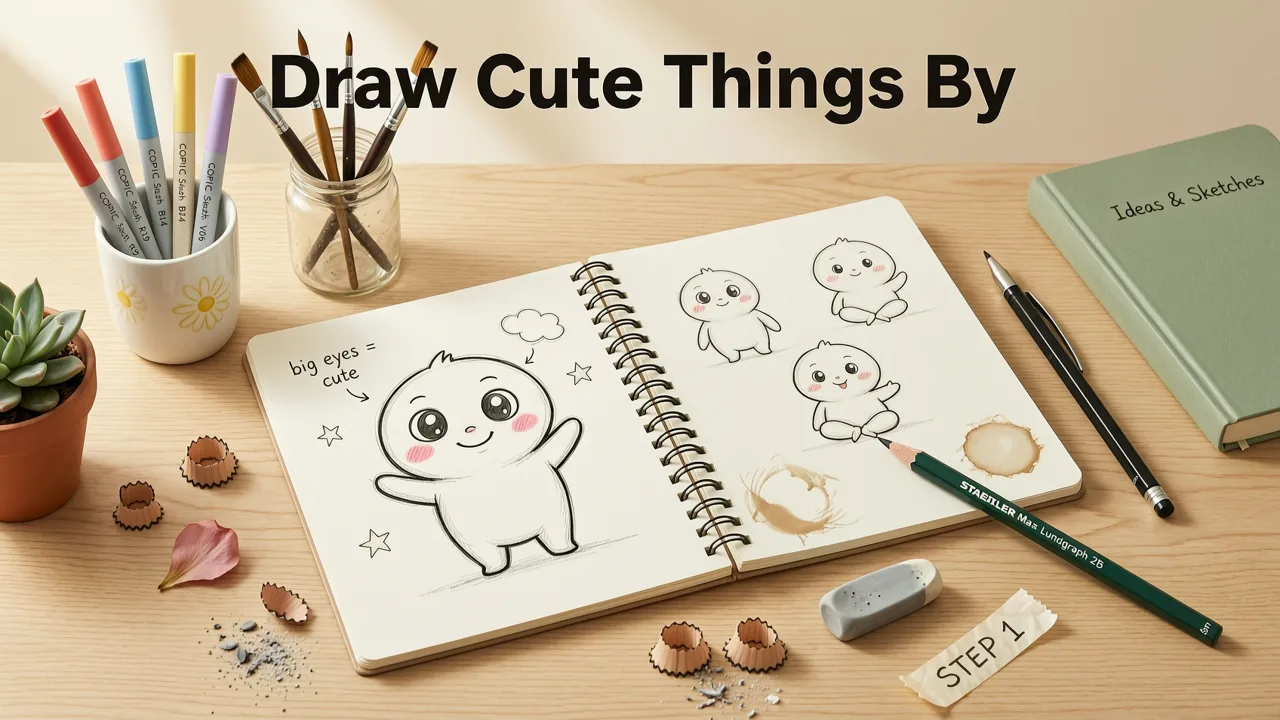
Wondering how to draw cute things step by step without feeling overwhelmed? Start with simple rounded shapes, use light construction lines, and trace a reference image through your phone camera using an AR overlay like AR Drawing. Within a single afternoon you can go from a blank page to a finished kawaii-style character, a chubby animal, or a cozy dessert doodle — all without expensive equipment, a light box, or years of practice.
Below is a complete, beginner-friendly walkthrough. You will learn what makes a subject look "cute," which supplies you actually need (hint: almost nothing), a repeatable step-by-step process, and a curated list of easy subjects to practice on today. Everything is written for 2026, when phone-based AR tracing has become the fastest way for hobbyists to build real drawing confidence.
What Makes Something Look "Cute" in a Drawing?

Before you pick up a pencil, it helps to understand why some drawings feel adorable while others feel stiff or serious. Cute art — whether it is called kawaii, doodle style, or chibi — follows a small set of visual rules. Once you know them, you can apply them to almost any subject.
How to Draw a Cute I LOVE YOU 'MOM' Card for Mother’s Day | Cute Easy Drawing for Kids
by Cute Easy Drawings
Rounded Shapes Over Sharp Angles
Cute things are round. Circles, ovals, soft curves, and puffy blobs read as friendly because they feel safe and approachable. Sharp triangles and long straight lines read as aggressive or technical. When you are planning a cute drawing, default to curves first and add angles only when you need them.
Exaggerated Proportions
A cute character usually has a head that is almost as big as its body, tiny limbs, and large eyes placed low on the face. This "baby schema" triggers a warm response in the viewer. You do not need to memorize anatomy — just push proportions toward roundness and chunkiness.
Simple Facial Features
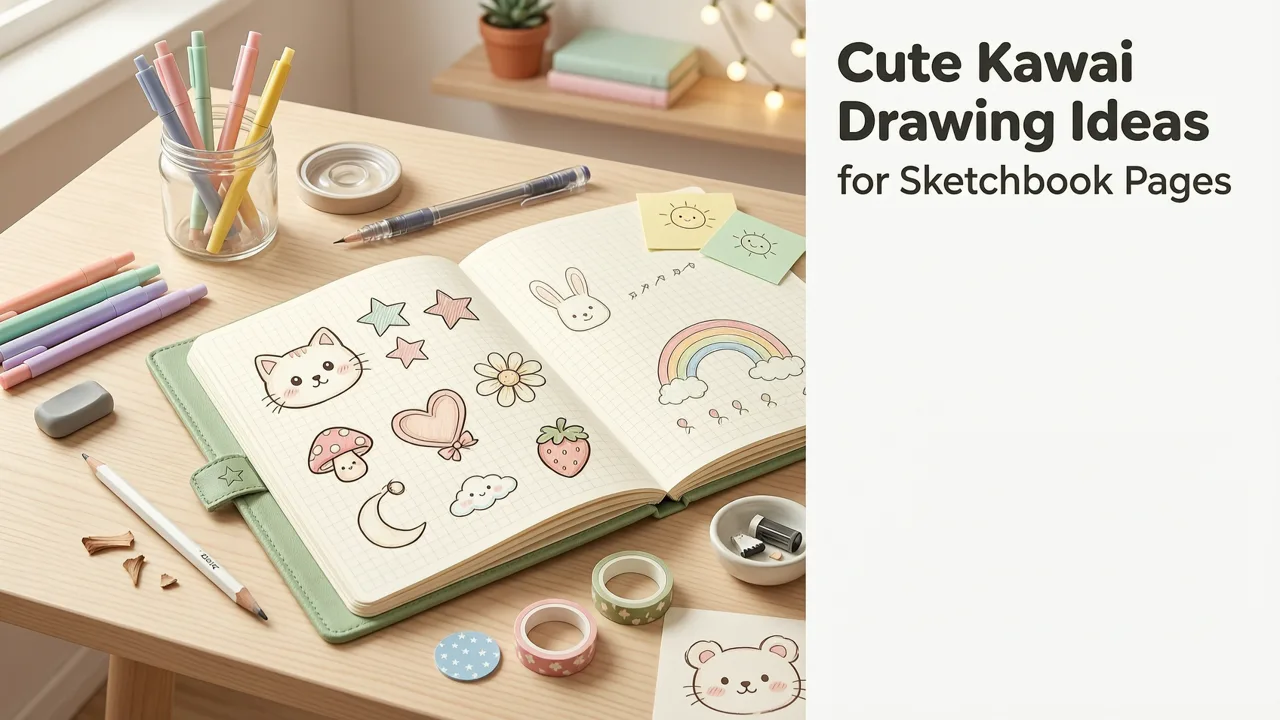
Two dots for eyes, a small curve for a mouth, and optional blush marks on the cheeks are often all you need. Less detail equals more charm in cute art. If you are unsure where to place the features, cute doodle ideas for practice are a great way to study placement by tracing real examples.
Soft Line Weight
Use a light hand and avoid heavy, confident outlines in your first pass. Cute drawings feel gentle, so your line work should too. You can darken the final lines later once you are happy with the shapes.
What You Need to Get Started (Minimal Kit)

One of the best things about learning how to draw cute things step by step is how little gear it requires. Here is the only kit you need in 2026:
- A smartphone — any recent iPhone that runs AR Drawing.
- A pencil — a standard HB or 2B mechanical pencil works perfectly.
- Eraser — a soft kneaded or vinyl eraser for cleaning up construction lines.
- Paper — plain printer paper or a cheap sketchbook. No need for fancy pads yet.
- Fineliner pen (optional) — for going over your final lines once the drawing is complete.
- Colored pencils or markers (optional) — if you want to add color after tracing.
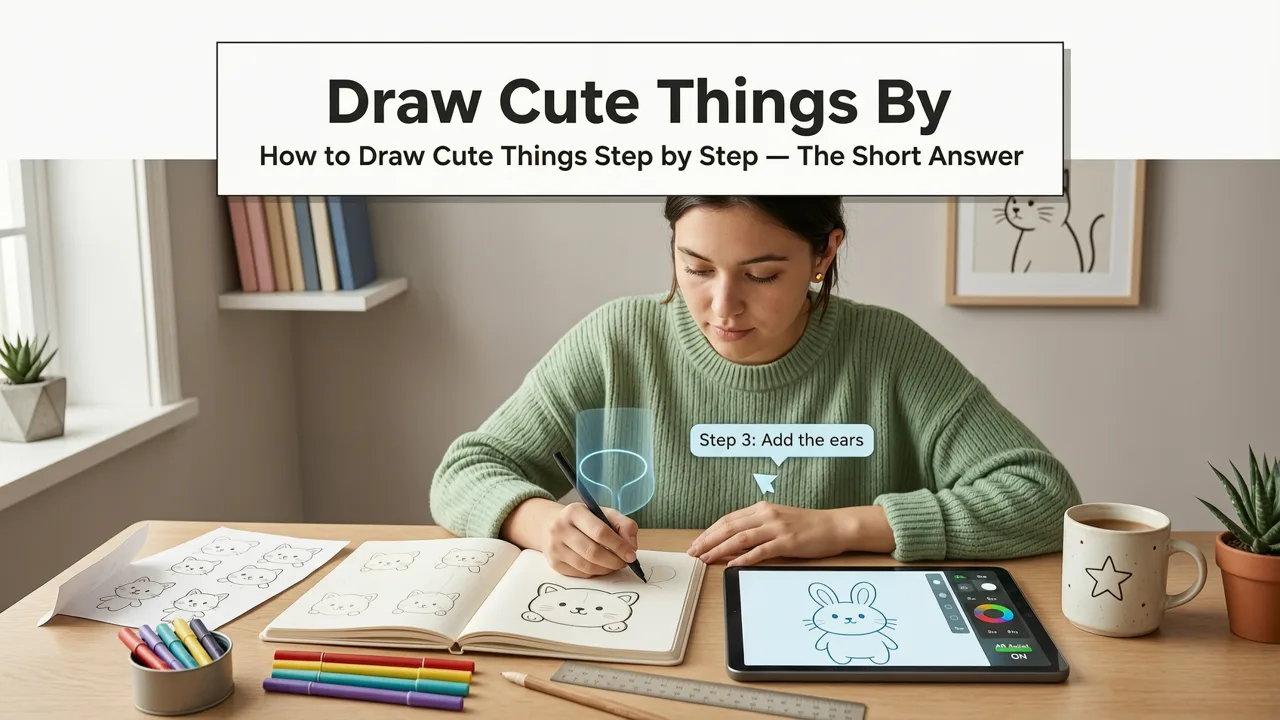
No tablet, no projector, no light box. Your phone camera becomes the tracing tool, and the AR overlay does the heavy lifting of holding the reference image steady on your paper.
Step-by-Step: How to Draw Cute Things Using AR Tracing
This is the core workflow. Follow it in order the first few times, then adapt it to fit your own pace.
Step 1 — Choose a Cute Reference Image
Pick something simple: a round animal, a smiling food item, a tiny plant in a pot, or a chubby character. Save the image to your phone. If you want ideas, browse cute things to draw for beginners for a ready-made list of approachable subjects.
Step 2 — Open AR Drawing and Load the Image
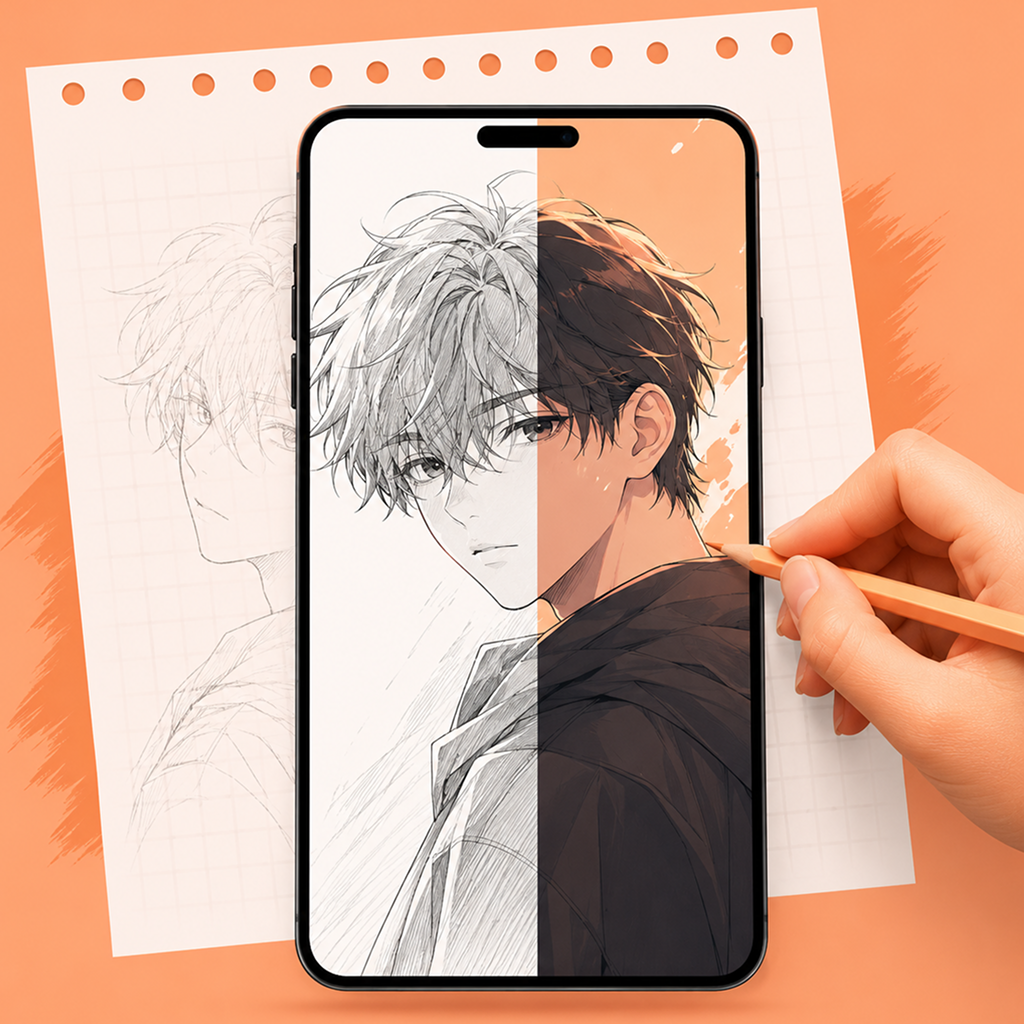
Launch the app and import your chosen image. The app turns your phone screen into a transparent overlay that sits directly on top of your paper. Position the phone so the image lines up with the area of paper where you want to draw.
Step 3 — Adjust Opacity and Scale
Use the opacity slider to make the overlay faint enough that you can still see your pencil on the paper beneath it. Resize the image so it fits your page with a little breathing room. A good starting point is around 30–40 percent opacity.
Step 4 — Trace the Main Shapes Lightly
With the overlay visible through your camera, trace the largest shapes first — the head, body, or main outline. Keep your pencil strokes light. Think of this pass as a map, not a final drawing.
Step 5 — Add Details and Facial Features
Move on to smaller elements: eyes, mouth, ears, paws, leaves, toppings on a cupcake. The AR overlay keeps everything in proportion so you do not have to guess where a feature should sit.
Step 6 — Remove the Phone and Refine
Set the phone aside. Look at your drawing with fresh eyes. Clean up any wobbly lines, erase stray construction marks, and darken the outlines you want to keep. This is where the drawing starts to feel like yours rather than a copy.
Step 7 — Add Color or Finishing Touches (Optional)
Color in soft pastels, add tiny highlights to the eyes, or scatter a few stars and hearts around the subject. Small decorative touches are a hallmark of cute art and they make the page feel finished.
10 Easy Cute Things to Draw Step by Step
Not sure what to draw first? Use this list as a warm-up rotation. Each subject can be completed in under 15 minutes with AR tracing.
| # | Subject | Key Shapes | Difficulty |
|---|---|---|---|
| 1 | Sleepy cat curled in a circle | Circle, small triangle ears | Beginner |
| 2 | Smiling strawberry | Oval, tiny leaf crown | Beginner |
| 3 | Baby penguin | Oval body, round head | Beginner |
| 4 | Cupcake with a face | Trapezoid base, cloud top | Beginner |
| 5 | Round bumblebee | Two circles, tiny wings | Beginner |
| 6 | Tiny potted cactus | Oval pot, rounded cactus body | Beginner |
| 7 | Cloud with a rainbow | Puffy cloud shape, curved arcs | Beginner |
| 8 | Chubby frog on a lily pad | Wide oval, circle eyes on top | Easy |
| 9 | Mushroom house | Dome cap, rectangle door | Easy |
| 10 | Star character with arms | Five-point star, stick limbs | Easy |
If you want even more animal-focused practice, the easy cute animals to sketch guide walks through subjects like bumblebees, baby penguins, and round bunnies with AR-specific tips.
Common Mistakes Beginners Make (and How to Fix Them)
Even with a great tracing workflow, a few habits can hold your drawings back. Watch out for these:
- Pressing too hard on the first pass. Heavy pencil pressure makes erasing painful and leaves grooves in the paper. Keep your tracing strokes feather-light.
- Skipping the big shapes. Jumping straight to eyes or details throws off proportion. Always block in the main silhouette first.
- Using only one line weight. Cute drawings gain charm when outlines vary slightly. Try a thinner line for inner details and a slightly thicker line for the outer silhouette.
- Comparing your page 1 to someone's page 100. Your fifth cute drawing will look noticeably better than your first. Give yourself room to improve.
- Ignoring the background. A few tiny stars, dots, or squiggles around the subject make the whole page feel intentional and finished.
How to Practice So You Actually Improve
Tracing is a learning tool, not a shortcut you hide. Used well, it builds the muscle memory and visual library you need to eventually draw freehand. Here is a simple weekly practice rhythm that works for busy hobbyists:
- Monday and Wednesday — Trace. Pick two subjects from the list above and trace them using AR Drawing. Focus on clean lines and correct proportions.
- Friday — Copy without tracing. Choose one subject you already traced and try to redraw it freehand from memory. Compare it to your traced version to see what shifted.
- Weekend — Create one original cute thing. Combine elements you have practiced: a cat wearing a cupcake hat, a frog holding a mushroom umbrella. Let your imagination mix what your hand has learned.
Within four to six weeks you will notice that your freehand sketches look closer to your traced ones, and your confidence will grow with every page.
Why AR Tracing Beats Traditional Methods in 2026
Older approaches to tracing — light boxes, projectors, carbon paper — are either expensive, bulky, or awkward to set up on a kitchen table. Phone-based AR tracing solves all three problems at once. Your phone is already in your pocket, the overlay adjusts in real time, and you can switch reference images in seconds. For beginners learning how to draw cute things step by step, this speed of iteration is everything. You can try ten subjects in the time it used to take to set up a projector for one.
"The best practice tool is the one you actually use. If your phone is always with you, your drawing practice can be too."
Tips for Getting the Most Out of Each Drawing Session
- Work on a flat, well-lit surface. Good lighting helps the camera track the paper and keeps your overlay steady.
- Tape your paper down. A small piece of painter's tape on each corner stops the page from sliding while you trace.
- Hold the phone steady or use a small stand. Even a folded towel propped under the phone can act as a makeshift mount for longer sessions.
- Keep a "finished" pile. Date each drawing and stack them face down. Looking back after a month is the fastest way to see your own progress.
- Share your work. Posting a single cute doodle online, even in a small community, builds momentum and invites encouragement.
Frequently Asked Questions
Do I need to know how to draw before using AR tracing?
Not at all. AR tracing is designed for complete beginners. You simply follow the overlay with your pencil. Over time you will internalize proportions and shapes, which is exactly how you build real drawing skill.
Can I draw cute things freehand after practicing with AR?
Yes. Most artists who trace consistently find that they need the overlay less and less. After a few dozen subjects you will be able to sketch basic cute characters freehand and only return to tracing when you want to try something more complex.
What if my lines look wobbly when I trace?
Wobbly lines are normal, especially at the start. Light construction passes hide most of the wobble, and you can clean up the final outline with a fineliner pen. Your hand steadiness will improve with every session.
Is AR Drawing available on Android?
As of 2026, AR Drawing is available on iOS. Check the app's official page for the latest platform availability and any future Android release updates.
Start Drawing Cute Things Today
Learning how to draw cute things step by step does not require talent, expensive gear, or years of classes. It requires a phone, a pencil, and a willingness to start with simple shapes. AR Drawing turns your iPhone into a personal tracing studio that fits in your bag, and the ten subjects above give you more than enough material for a month of daily practice. Open the app, pick your first cute character, and put pencil to paper — your drawing habit starts right now.